 Healthcare
 USA
USA 16 Weeks
Pediatric Therapy Evaluation Platform for Speech & Occupational Therapy
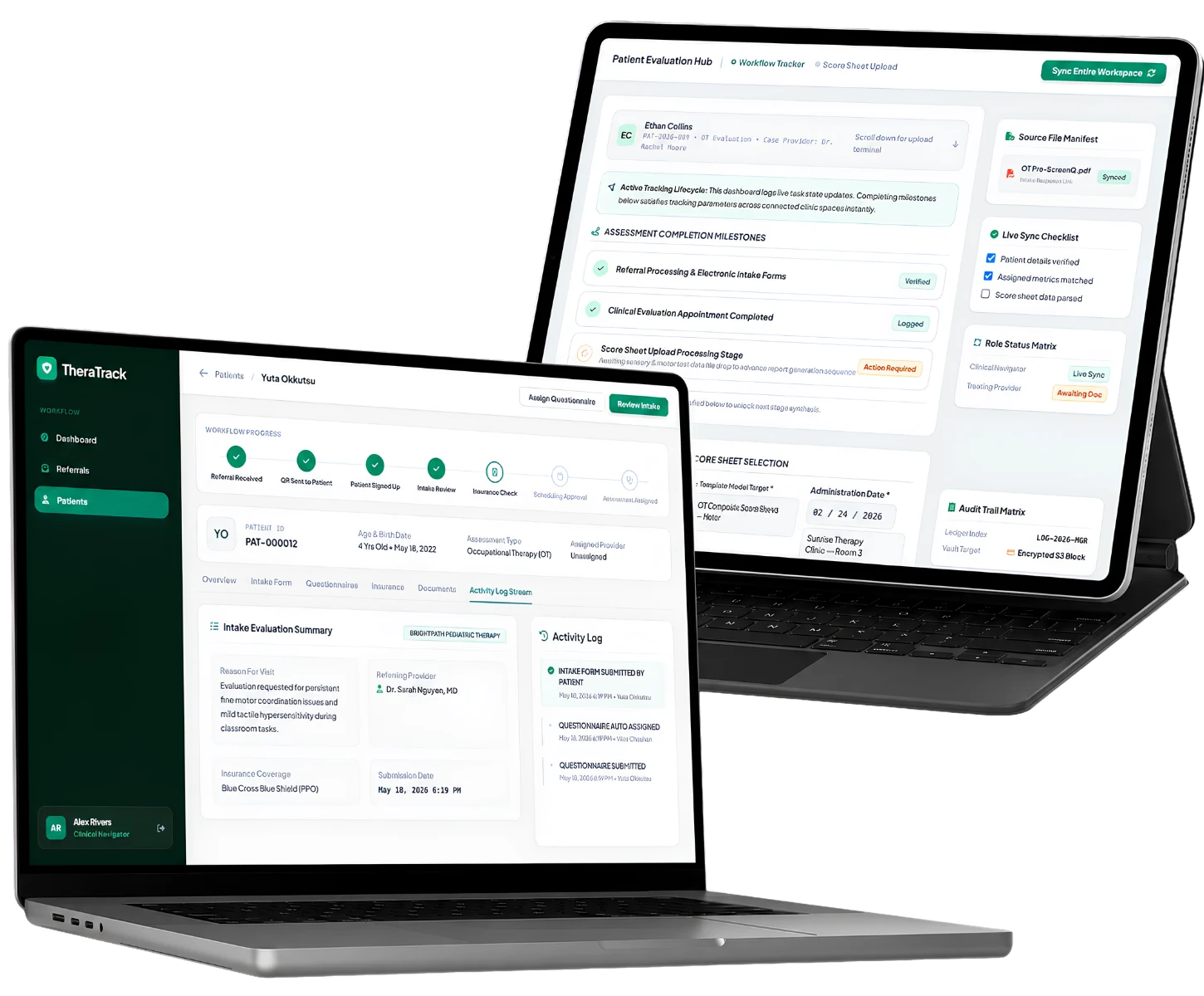
We built HIPAA-compliant pediatric therapy software for speech & occupational therapy. It covers assessments, score sheets, audit logging, and report generation
Overview
Pediatric therapy evaluation is not a simple process. A single patient can move through referrals, intake forms, multiple assessments across ST and OT, score sheet submissions, and provider sign-offs, all before a final report gets generated. When you layer multiple clinics, four user roles, and strict compliance requirements on top of that, the coordination burden gets heavy fast. Seaflux built a custom EHR software solution that handles all of it in one place. The system functions as a healthcare workflow automation platform, managing the full evaluation lifecycle and enforcing structured workflows so nothing gets skipped, no document goes untracked, and providers spend less time on paperwork. It is also built to grow. The architecture already accounts for ABA, Physical Therapy, and School District workflows when the client is ready to expand.
The Challenge
Client Overview
The client runs pediatric therapy clinics across multiple locations, handling speech therapy and occupational therapy evaluations for a growing patient base. Their existing speech therapy software and occupational therapy software setups were fragmented, with no unified view across assessments, providers, or locations. They had been managing workflows through a basic therapy EMR software that was not built for the volume or complexity they were dealing with. Speech therapy practice management and occupational therapy EMR workflows were handled separately. Providers were spending too much time on documentation. Admins had no reliable way to track assessment status across the board. They needed something built specifically for how pediatric therapy clinics actually operate, not a generic healthcare tool they would have to work around.
Key Pain Points
- Four user roles (Super Admin, Organization Admin, Clinic Navigator, and Provider), each with different needs, different data access, and different parts of the workflow to own
- Assessment tracking had to follow a specific sequence. Skipping steps or jumping states was not acceptable from a clinical or compliance standpoint
- The system needed to handle both manual assessment completion and score sheet uploads without creating two separate, disconnected processes
- Score sheet uploads had to be secure, auditable, and tied tightly to lifecycle state, not just dropped into storage
- The team wanted to prepare for AI-powered OCR and report generation without building it prematurely
- Providers were already stretched thin. Any added documentation overhead would be a dealbreaker
- HIPAA-compliant software development standards had to be maintained across every data flow, file upload, and user interaction without slowing down clinical workflows
- ST and OT had different assessment types, and the architecture needed to support more specialties later without being rebuilt
- Every action taken on a patient evaluation, by any user, needed to be logged and traceable
- Multiple organizations on the same platform meant data isolation was not optional
Our Solution
Assessment Event Tracking
Assessment Management Workflow
Secure Score Sheet Upload Functionality
Role-Based Workflows
Patient Evaluation Workflows
Multi-Tenant Healthcare Architecture
AI Processing Foundation
Purpose-Built Features for Pediatric Therapy Evaluation
The tools clinics actually need, without the overhead of platforms built for something else

Assessment Lifecycle State Machine
Clinical workflows cannot afford shortcuts. The state machine locks assessment progression to a defined sequence: no step gets skipped, no transition happens out of order. Every evaluation moves forward the way it is supposed to, every time.

Secure Score Sheet Upload and Storage
File uploads are validated before they are accepted, stored in AWS S3, and locked to the assessment's current lifecycle state. If conditions are not met, the upload is rejected. Every accepted file is logged and traceable.

Role-Based Access Control (RBAC)
Super Admin, Organization Admin, Clinic Navigator, and Provider each get a workflow built around what their role actually requires. Permissions are enforced at the data level, not just hidden behind a UI element.

Patient Evaluation Management
Referrals, intake forms, questionnaires, and assessments all tracked in one place. Staff know exactly where every patient stands without digging through emails or asking around.

Real-Time Assessment Status Synchronization
When a provider updates an assessment, that change is immediately visible to navigators and admins. No one is working off stale information or making decisions based on an outdated status.

Complete Audit Trail and Event Logging
PostgreSQL audit logging automatically captures every action taken on every evaluation. Organizations get a full, timestamped history of what happened, who did it, and when, without anyone having to maintain it manually.

Multi-Tenant Healthcare Architecture
Each organization on the platform operates in complete isolation. Shared infrastructure, separate data. Clinics cannot access each other's patient records, workflows, or organizational settings under any circumstances.

AI-Ready Data Processing Framework
Score sheets are stored and structured in a format that connects directly to future OCR and AI extraction pipelines. When the client is ready to automate report generation, no architectural changes are needed. The data is already in the right shape.
Built with Modern Tech
We leverage cutting-edge technologies to build scalable, secure, and high-performance applications that grow with your business.
 ReactJS
 TypeScript
 Node.js
 Express
 PostgreSQL
 AWS S3
 AWS S3
 JWT
JWT RBAC
RBAC Event Logging
 OCR
OCR AI Extraction Framework
Measurable Results
Real outcomes that transformed our client's operations and delivered significant ROI.

Workflow State Compliance
Not a single assessment on the platform has skipped a required lifecycle stage or made an invalid state transition since go-live.

User Roles Supported
Super Admin, Organization Admin, Clinic Navigator, and Provider all work within the same platform, each with their own workflow, permissions, and data access.

Faster Documentation Processing
Score sheet handling that previously involved manual steps now runs through a single validated pipeline, cutting processing time down significantly.

Audit Trail Coverage
Every user action, file upload, and status change is automatically logged. Nothing requires manual record-keeping to stay traceable.

Therapy Specialties Supported
ST and OT are live. ABA, Physical Therapy, and School District workflows are already accounted for in the architecture, with no rebuild required to add them.

Manual Workarounds Required
The workflows are structured around how clinics actually operate. Staff have not needed to go outside the system to complete or track any evaluation.

Organizations on Shared Infrastructure
Multiple clinics run on the same platform with complete data isolation. Shared infrastructure, zero data overlap.

Foundation for Automated Report Generation
Score sheet data is already structured for OCR and AI extraction. When the client moves forward with automated reporting, the platform will not need to be rebuilt to support it.
Project Delivery Approach
A proven methodology that ensures quality delivery, on time and on budget.
Discovery and Workflow Mapping
Before anything was designed or built, we sat down with clinical staff, navigators, and administrators to understand how evaluations actually moved through their clinics. We mapped every role, every handoff, every edge case, and every compliance requirement. That became the foundation everything else was built on.

Architecture Design and Multi-Tenancy Planning
With the workflow mapped, we designed the backend around it. The multi-tenant healthcare architecture we built enforces strict data isolation and role-based access at the database level. HIPAA-compliant software development standards guided every decision around data handling, access control, and audit logging. The schema was kept flexible enough to handle new specialties and assessment types without being restructured later.

Assessment Lifecycle and State Machine Development
The state machine was the most critical piece of the build. We defined every valid assessment state and every allowed transition, then built the enforcement logic so invalid progressions were blocked at the system level, not just flagged after the fact.

Role-Based Workflow and UI Development
Each of the four user roles got its own frontend experience built in React and TypeScript. We kept each role's interface focused on exactly what they needed to do, nothing more and nothing less.

Secure Score Sheet Upload and Audit Integration
The upload pipeline was built with validation, S3 storage, lifecycle checks, and automatic event logging all working together. A file does not make it into the system unless every condition is met, and every accepted file leaves a full audit trail behind it.

AI Processing Foundation Setup
We structured the assessment data and upload storage in a way that is ready for OCR and AI extraction when the time comes. The client does not need a second build phase to add AI capabilities. The platform is already prepared for it.

Testing, Compliance Review, and Production Deployment
We ran end-to-end testing across every user role and every assessment type before anything went live. Compliance requirements were reviewed at each stage, and the production deployment included monitoring and access controls from day one.
