Pydantic AI: Build Production-Ready AI Agents with Type Safety
What is Pydantic AI?
Pydantic AI is a GenAI agent framework built “the Pydantic way,” designed to make AI development type-safe, reliable, and intuitive. Utilizing Pydantic's rigid typing philosophies transitions entire classes of errors away from runtime into write-time, providing developers with additional guarantees and improved IDE support through capabilities such as auto-completion and type checking. The framework provides the ability for agents to engage different AI models, invoke custom tools, maintain structured conversations, and orchestrate complex workflows in which data integrity is maintained. Pydantic AI does not dilute safety like many AI frameworks do for flexibility because it retains data validation as a feature, while also providing dependency injection and observability features, making it useful for building everything from powerful chatbots to sophisticated multi-agent systems employing the latest LLM capabilities.
Key Features
- Full Type Safety: Pydantic AI is designed to provide maximum context for auto-completion and type checking, creating a Rust-like "if it compiles, it works" experience. This means fewer runtime errors and more confident deployments.
- Powerful Dependency Injection: The framework includes a type-safe dependency injection system that allows you to customize agent behavior effectively, particularly useful for unit tests and evaluations. This feature enables clean separation of concerns and makes your agents highly testable.
- Model Agnostic Architecture: Pydantic AI works with multiple AI providers and models. If your favorite model or provider is not listed, you can easily implement a custom model. This flexibility ensures you're not locked into any specific AI provider.
- Integrated Observability: The framework is integrated with Pydantic Logfire so you can easily debug, monitor performance, and trace behavior in real time. This assists in monitoring your AI agents in production and understanding where your agents' performance might bottleneck.
- Structured Tool Interface: Your framework provides the ability to define your own tools with full type safety, enabling agents to interact with APIs, databases, and services externally and maintain data validation at every level.
Benefits
- Enhanced Developer Productivity: Pydantic AI significantly enhances developer productivity by automating repetitive tasks such as input validation, schema enforcement, and error-handling logic. These time-consuming tasks are managed seamlessly, allowing developers to focus on core business logic.
- Production-Ready from Day One: With built-in type safety, comprehensive error handling, and observability features, applications built with Pydantic AI are ready for production deployment without extensive additional tooling.
- Reduced Technical Debt: The framework's emphasis on type safety and structured data handling helps prevent the accumulation of technical debt that often plagues AI applications as they grow in complexity.
- Seamless Integration: As part of the Pydantic ecosystem, Pydantic AI integrates seamlessly with existing Python applications using Pydantic models, FastAPI applications, and other tools in the Python data science stack.
- Cost Optimization: Through efficient resource management, structured caching, and optimized model interactions, Pydantic AI helps reduce operational costs associated with AI model usage.
Practical Use Cases
- Data Analysis Agents: Build data analysis agents that help understand business performance across different regions and products, starting simple and growing more sophisticated with custom tools and structured outputs.
- Customer Support Automation: Create intelligent customer support agents that can handle complex queries, access knowledge bases, and escalate issues when necessary, all while maintaining conversation context and data integrity.
- Content Generation and Review: Develop agents that can generate, review, and optimize content across multiple formats while ensuring consistency with brand guidelines and quality standards.
- Business Process Automation: Build agents that can automate complex business workflows, integrate with existing systems, and provide real-time reporting and analytics.
- Research and Analysis Tools: Create research agents that can gather information from multiple sources, analyze data patterns, and generate comprehensive reports with proper citations and structured outputs.
Comparison with Other Similar Tools
Feature / Tool | PydanticAI | Agno AI | CrewAI | LangChain |
Primary Focus | Type-safe AI agent framework using Pydantic models | Multi-agent framework for AI-driven apps with workflows and tools | Orchestrating teams of specialized AI agents (collaborative AI) | Framework for building LLM-powered apps (chains, agents, tools) |
Core Strength | Strong data validation, structured outputs, and schema enforcement | Flexible orchestration, task automation, and tool integration | Multi-agent collaboration with role-based delegation | Rich ecosystem for prompt management, memory, and tool use |
Approach | Schema-first (validated inputs/outputs with Pydantic) | Tool-first (agents + workflow automation) | Agent-first (assigns AI “roles” to work together) | Chain-first (step-by-step pipelines for LLM tasks) |
Use Cases | Reliable AI agents, structured response generation, and compliance-heavy apps | AI automation, RPA-like workflows, integrations with APIs/tools | Complex tasks requiring teamwork of agents (research, ops, planning) | Chatbots, document Q&A, RAG, knowledge agents |
Integration Ecosystem | Built on Python + Pydantic; integrates with OpenAI, Anthropic, etc. | Connects to external tools/APIs (e.g., Slack, GitHub, Google APIs) | Works with vector DBs, APIs, and external tools | Very large ecosystem: vector DBs, retrievers, agents, memory, tools |
Complexity Level | Lightweight & developer-friendly | Medium – needs workflow setup | Higher – managing multi-agent collaboration | Higher – lots of components, steep learning curve |
Best For | Developers needing structured, safe AI outputs | Businesses automating processes with AI | Teams building multi-agent AI systems | Developers building advanced AI-powered apps |
Maturity | New & growing (2024+) | Emerging project (2024) | Growing adoption in the agentic AI space | Most mature & widely adopted (since 2022) |
Community & Support | Backed by the Pydantic ecosystem | Smaller but growing | Open-source, community-driven | Large open-source community, enterprise support |
Limitation & Considerations
- Learning Curve for Type Safety: Developers new to strict typing might face an initial learning curve when adopting Pydantic AI's type-safe approach, especially if coming from more flexible frameworks.
- Ecosystem Maturity: As a relatively new framework, Pydantic AI has a smaller ecosystem compared to established tools like LangChain, which might mean fewer community-contributed integrations and examples.
- Performance Overhead: The extensive type checking and validation can introduce minor performance overhead, though this is typically negligible compared to the benefits of reduced runtime errors.
- Limited Multi-Agent Scenarios: While excellent for single agents and structured tasks, Pydantic AI may not be the best choice for complex multi-agent orchestration compared to specialized frameworks like CrewAI.
How to access or activate Pydantic AI
Getting started with Pydantic AI is straightforward. First, install the framework using pip:

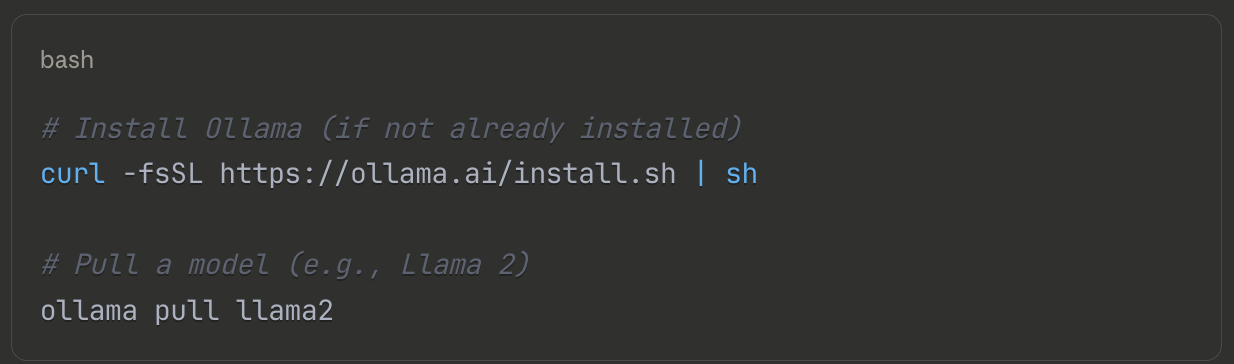
For development with local models using Ollama:
Basic Tutorial
from pydantic import BaseModel
from pydantic_ai import Agent


# Define a structured response model

class WeatherResponse(BaseModel):

    temperature: float

    condition: str

    humidity: int


# Create an agent with a structured response

weather_agent = Agent(

    'openai:gpt-4',  # or 'ollama:llama2' for local models

    result_type=WeatherResponse,

    system_prompt="You are a helpful weather assistant. Always provide temperature in Celsius."

)

# Run the agent

async def get_weather():

result = await weather_agent.run("What's the weather like in London today?")

    print(f"Temperature: {result.data.temperature}°C")

    print(f"Condition: {result.data.condition}")

    print(f"Humidity: {result.data.humidity}%")


# For synchronous usage

import asyncio

asyncio.run(get_weather())
Link to Documentation and Resources
- Official Documentation
- GitHub Repository
- Examples and Tutorials
- Pydantic Logfire Integration
- Community Tutorials: Various comprehensive guides are available on platforms like DataCamp and Medium for deeper learning.
Smart AI & Software Solutions for Modern Businesses
As a custom software development company, we at Seaflux build scalable digital products that solve real business challenges. Our expertise spans custom AI solutions that automate tasks and improve decision-making, and chatbot development that enhances user engagement across platforms.
Looking for something more specific? We also provide custom chatbot solutions tailored to your business needs. As a trusted AI solutions provider, we deliver innovation from idea to implementation
Schedule a meeting with us to explore how we can bring your vision to life.

Shreem Panchal
Software Engineer