DevOps vs Platform Engineering: Navigating Your Next DevOps Transformation
There is a change happening inside engineering orgs. And it is not subtle if you are close to delivery pressure.
Developers are slower. That’s not because they lack skill. But it is because the system around them is heavier.
More tools. More approvals. More decisions they were never meant to make.
DevOps was supposed to fix this.
It did… for a while.
But as systems scaled, DevOps started showing cracks. Teams became responsible for everything. Be it writing code or managing infrastructure or handling CI/CD or securing pipelines or debugging deployments. The promise of autonomy turned into operational overload, highlighting the ongoing DevOps evolution.
That’s where Platform Engineering enters the conversation as a next step in the DevOps evolution 2026 is demanding, and where the discussion around Platform Engineering vs DevOps becomes increasingly relevant relevant in the context of platform engineering 2026.
What is Platform Engineering?
Platform Engineering is the practice of building and maintaining internal developer platforms that provide standardized tools, workflows and infrastructure. It focuses on reducing complexity by creating reusable systems that developers can use without needing deep operational knowledge, offering a clear view of platform engineering explained in practice. An internal developer platform acts as the backbone that enables teams to build and deploy software efficiently.
When DevOps becomes Operational Overhead
DevOps was built on a powerful idea. It was that ownership drives accountability and speed. “You build it, you run it” gave developers control over their entire lifecycle.
In smaller systems, that works well. But in larger organizations, that same ownership starts to blur lines. Developers are building features. But along with that they are configuring infrastructure, managing pipelines and handling security policies. They are even debugging deployments and making decisions that require deep operational context, even with the growing adoption of AI in DevOps tools.
Over time, this creates friction.
Not the kind that shows up in dashboards immediately. But the kind that slows teams quietly. Onboarding takes longer. Releases feel heavier. This creates bottlenecks around senior engineers, as they are the only ones who understand how everything connects.
This is where reducing developer cognitive load moves beyond a UX discussion. It becomes a business concern and highlights the importance of cognitive load reduction across engineering teams.
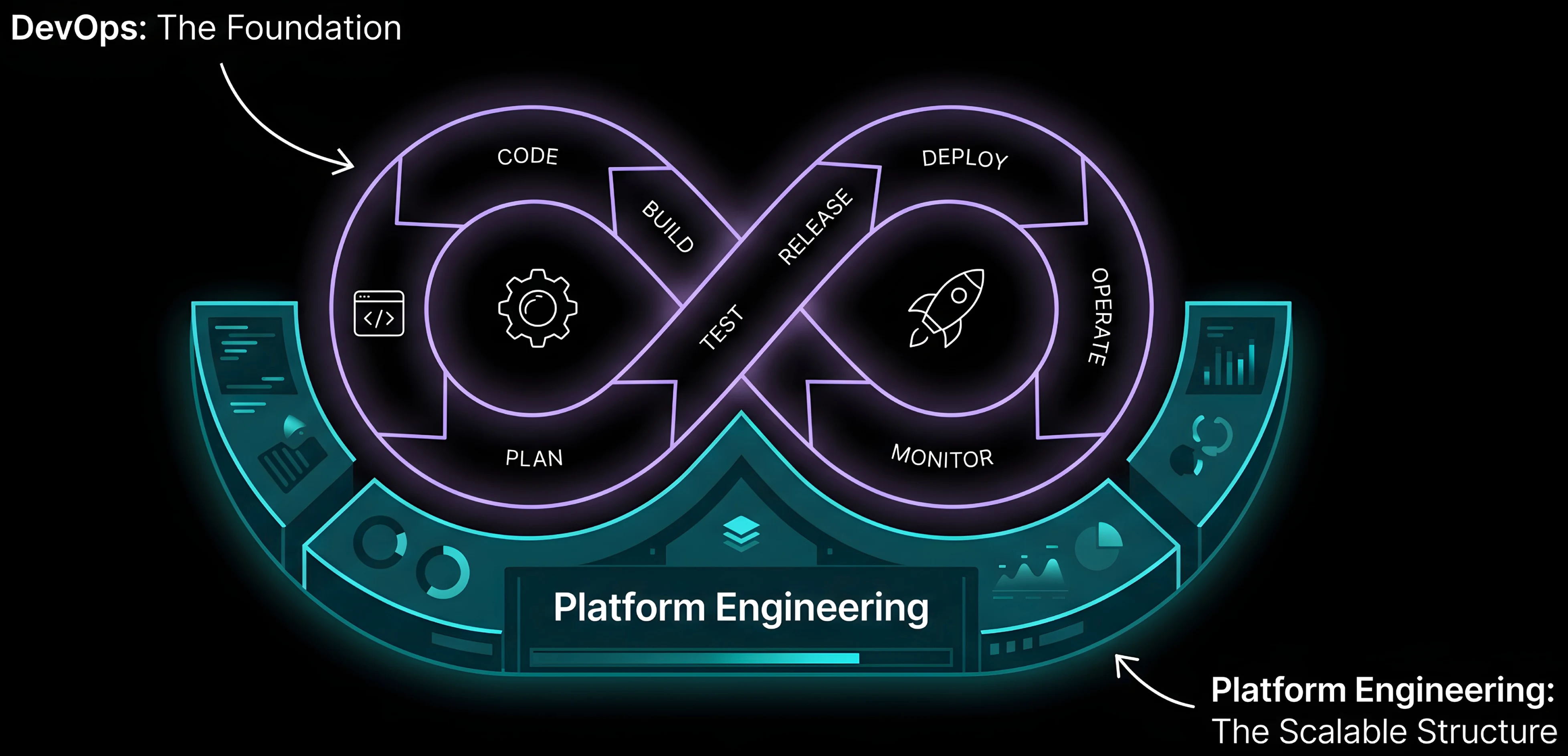
The change from Ownership to Enablement
The industry is not abandoning DevOps. It is refining it as part of the broader DevOps evolution.
Organizations are moving away from having every team figure out infrastructure on their own. They are building shared systems where decisions are made once and reused across teams, often by standardizing platform engineering tools across the organization as part of the ongoing shift seen in DevOps vs Platform Engineering practices and strengthening their platform engineering IDP approach.
The change is simple but meaningful.
From: “You build it, you run it.”
To: “You build it on a paved road we have already built for you.”
That paved road is the foundation of an Internal Developer Platform (IDP), often described as a golden path platform engineering approach that guides developers with predefined best practices.
It is not just a collection of tools. It is a structured environment where infrastructure, security and deployment workflows are standardized and exposed in a way developers can actually use without friction, which is central to a platform engineering IDP strategy.
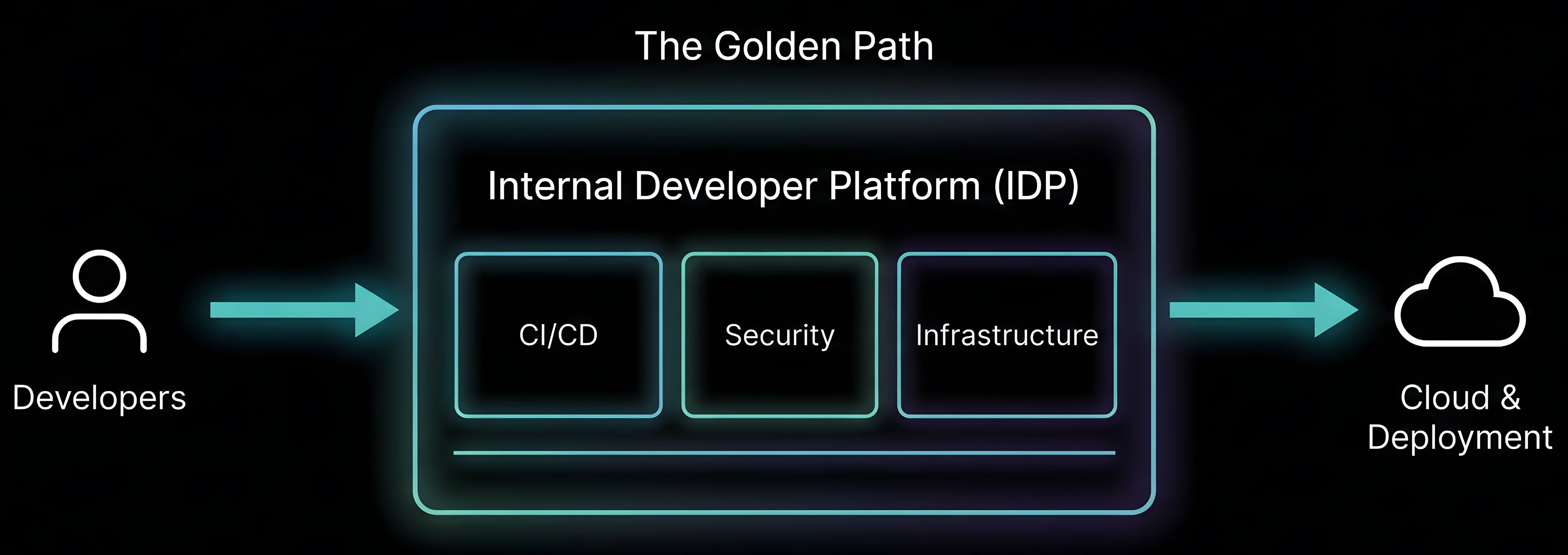
What Platform Engineering changes
Platform Engineering introduces a different way of thinking about infrastructure. Instead of being a background responsibility scattered across teams, it becomes a product in itself, aligning with the concept of infrastructure as a product and highlighting key platform engineering benefits for scaling teams.
That product is designed for one audience that’s developers.
The aim is not to remove control, but to cut out unnecessary complexity. Developers shouldn’t have to figure out environment setup each time they start something new. They also shouldn’t need to choose a deployment pattern each time. Those decisions are already made, tested and embedded into the platform, often through carefully selected platform engineering tools.
This is where developer self-service becomes real. Not in the sense of “figure it out yourself,” but in the sense of “everything you need is already set up, just use it,” reinforcing the idea of a golden path platform engineering experience.
Understanding DevOps and Platform Engineering on the Ground
The difference between DevOps and Platform Engineering is less about ideology and more about execution, which is at the core of the Platform Engineering vs DevOps comparison.
DevOps gives teams principles. Those are automation, collaboration, ownership. Platform Engineering turns those principles into a system that scales.
In a DevOps-heavy setup, teams often build their own pipelines. They also define their own infrastructure patterns. Along with that they manage their own environments too. It is powerful. But it comes at the cost of inconsistency.
Platform Engineering introduces a layer. A layer where those patterns are predefined. Teams no longer solve the same problems repeatedly. They build on top of shared and well-defined infrastructure.
The result is not less flexibility. It is focused flexibility where teams can innovate where it matters. That also without being slowed down by everything else.
Why this Change Matters in 2026
The conversation around DevOps evolution 2026 is being driven by scale and not trends, even as AI in DevOps continues to evolve.
Organizations today manage distributed systems, global teams and increasingly strict compliance requirements. Inconsistency has become costly to handle. That cost is not manageable.
Without a structured platform layer, teams start to experience:
- Slower delivery cycles as complexity increases
- Higher risk due to inconsistent security practices
- Difficulty onboarding new engineers
- Burnout among developers who spend more time managing systems than building them
These are not isolated issues. They compound over time.
Platform Engineering addresses this by introducing consistency without introducing rigidity. It creates a foundation where teams do not have to reinvent the same processes. Here, best practices are built into the system itself, enabling long-term cognitive load reduction.
The Role of the Internal Developer Platform
An internal developer platform acts as the interface between developers and infrastructure. But its real value lies in what it removes.
It removes the need for developers to understand the underlying complexity of cloud environments. It removes repetitive setup work. It removes the uncertainty around security and compliance. Instead, it provides a clear path from idea to deployment, contributing directly to cognitive load reduction.
A developer can spin up an environment and deploy a service. They can monitor performance without stepping outside the platform. The experience is consistent, predictable and fast.
This is where Cloud Computing Services and DevOps & Infrastructure Services evolve. They are not reactive support layers. They become the foundation that enables every product team to move faster as part of a mature DevOps transformation.
Reducing Cognitive Load is the Real Multiplier
Most engineering leaders focus on optimizing systems. Fewer focus on optimizing decision-making. Each unnecessary decision slows a developer down. It is subtle but it builds up over weeks and months.
Choosing tools, configuring environments and debugging inconsistencies do not create real value. They are friction points. Platform Engineering removes these decisions at scale and plays a critical role in cognitive load reduction.
It allows developers to focus on building and shipping product. This is done by standardizing infrastructure and workflows. This is why reducing cognitive load is not just about improving developer experience. It is about improving output.
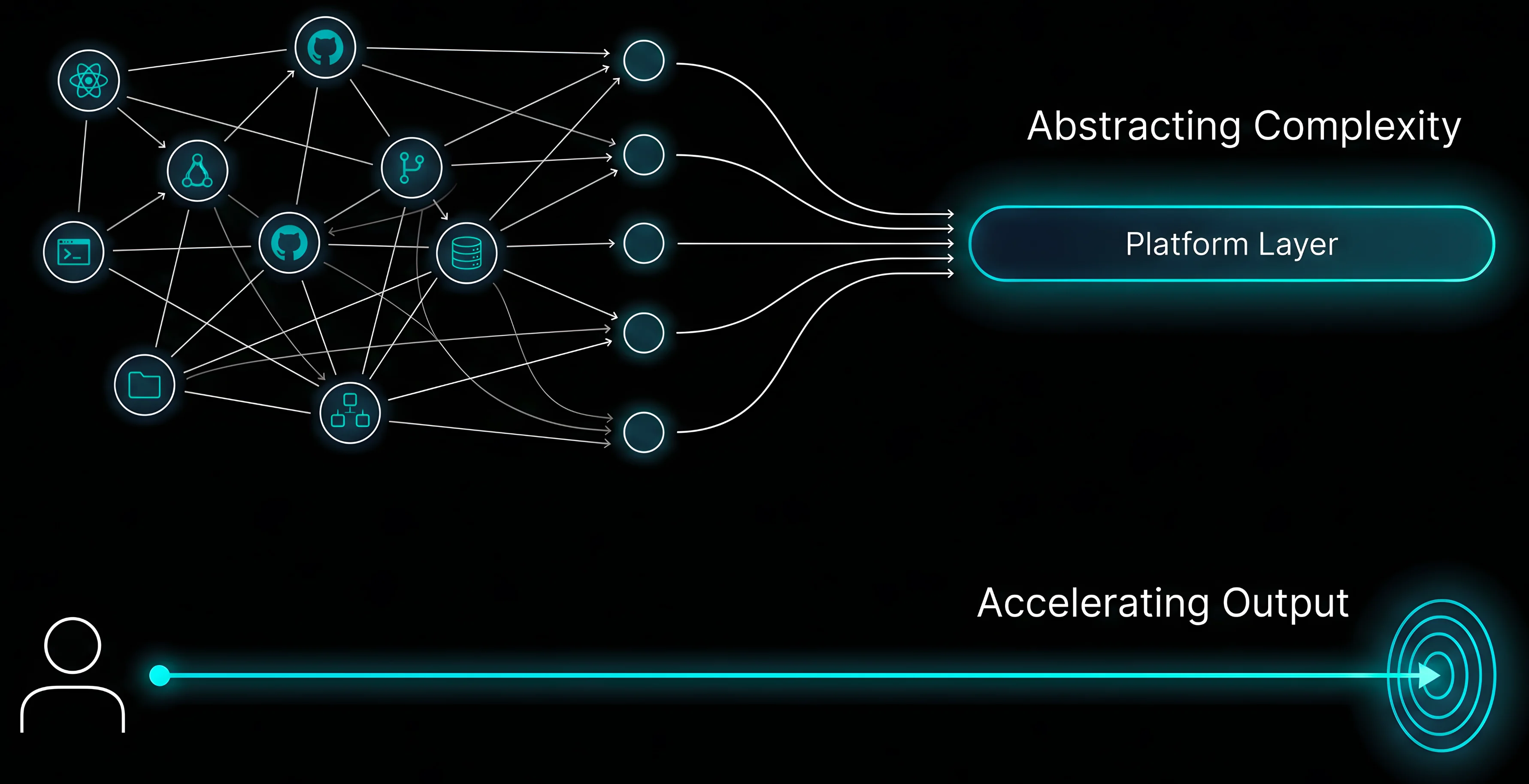
Infrastructure needs to Be Treated like a Product
One of the most important changes in this transition is mindset.
Infrastructure can no longer be treated as a collection of scripts, tools and one-off solutions. It needs ownership, design and continuous improvement. It is just like any other product.
Platform Engineering brings that discipline and builds on the foundation established during a DevOps transformation.
It introduces clear ownership of internal systems, structured roadmaps and feedback loops from developers who use the platform daily. Infrastructure becomes intentional instead of being reactive.
This is where Custom Software Development intersects with platform thinking. The same rigor applied to external products is now applied internally to the systems that power them.
Knowing when it’s Time to Evolve
Not every organization needs to invest in Platform Engineering immediately. But the signals are hard to miss.
If teams are duplicating effort or if onboarding feels slow or if deployments are inconsistent or if developers are stretched across too many responsibilities, the cost is already there.
At that point, the question isn’t whether DevOps is working. It’s whether it’s working at scale.
The Bottom Line
DevOps transformed how teams build and ship software. But scale demands structure.
Platform Engineering provides that structure. Not by replacing DevOps but by making it sustainable and extending the value of a DevOps transformation.
It turns scattered practices into a cohesive system. It reduces friction without reducing autonomy. And most importantly, it allows teams to move faster without burning out the people building the system.
In 2026, the advantage is not just having DevOps in place. It is having a platform that makes it work.
Scale Your Engineering with Seaflux
Scaling your engineering team requires the right foundation. As a dedicated cloud computing services provider, Seaflux helps organizations build infrastructure that truly supports developers.
Whether you need robust enterprise cloud solutions or a reliable devops services provider, we ensure a seamless transition. As a full-cycle Custom software development company and a strategic cloud solutions provider, we understand both your code and the systems running it. With our managed cloud services, your developers can focus on building great products instead of managing complex deployments.
Ready to reduce operational overhead and build the perfect internal platform? Schedule a meeting with us today to discuss your next big move.

Krunal Bhimani
Business Development Executive