 Retail & E-commerce
 Europe
 12 Weeks
NFT Ticketing System with ERC-6551 Wallets & Secure Document Storage
Explore an NFT ticketing platform with token bound accounts, secure document storage, and subscription management for seamless event access and ownership.
Overview
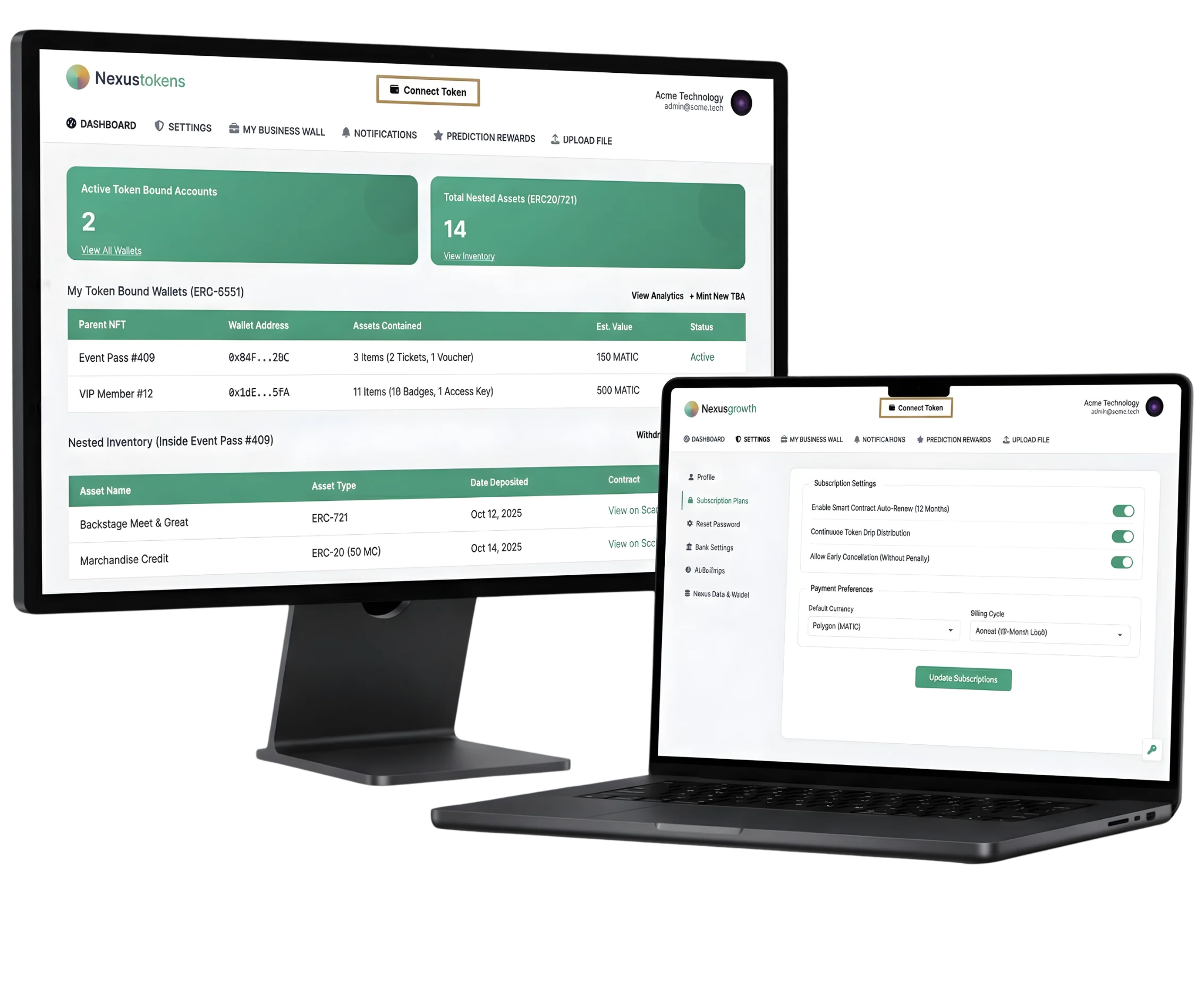
People usually just buy and flip NFTs. This project went in a completely different direction. By focusing on Token Bound Accounts through an ERC 6551 implementation, we turned these digital items into active containers. Users get a practical tool for handling decentralized subscriptions, storing private files, and managing event entries through a powerful NFT ticketing system.
The Challenge
Client Overview
The client runs a major European blockchain-as-a-service firm. They handle large-scale enterprise infrastructure and high-volume Web3 marketplaces.
Key Pain Points
- Designing a draft system. Users needed a way to pause complex NFT setups and finish them later.
- Writing smart contracts for recurring subscriptions that distribute tokens on a predictable schedule for efficient subscription management.
- Putting together a gated referral loop. Only verified NFT holders should get codes to invite friends for rewards.
- Tying real-time QR codes to NFTs within an event ticketing platform. They needed to function as actual tickets for live venues and online streams.
- Taking sensitive real-world documents and turning them into highly secure, tokenized files that only the owner can read, aligning with best practices in NFT marketplace development.
Our Solution
Token Bound NFT Wallet
Subscription Smart Contract
Referral Code System
Dynamic QR Codes
Secure Document NFTs
Bulk Upload & Configuration Versioning
Main Platform Tools
Making digital collectibles actually useful in the real world using token bound accounts.

ERC-6551 Setup
Turns a basic image token into a working Token Bound Account. The NFT becomes a mini-wallet that carries its own assets, showcasing advanced NFT wallet development.

FHE File Protection
Locks down tokenized personal records using Fully Homomorphic Encryption combined with blockchain document storage. Nobody else can snoop on your files.

Web3 Subscriptions
A clear-cut smart contract system designed for efficient subscription management. Pay MATIC upfront, get a steady flow of tokens, and cancel whenever you feel like it.

Live Event Passes
Generates a unique, trackable QR graphic for your token. It works exactly like a digital ticket for concerts or webinars within an event ticketing system.
Built with Modern Tech
We leverage cutting-edge technologies to build scalable, secure, and high-performance applications that grow with your business.
 OpenSea
 Pinata
 AWS EC2
 AWS SES
 AWS S3
 AWS S3
 Solidity
 Polygon
 MySQL
MySQL ReactJS
 Node.js
Measurable Results
Real outcomes that transformed our client's operations and delivered significant ROI.

More Items Listed
Letting creators save their work in progress directly caused a bump in new listings. They weren't losing their drafts anymore.

Document Tokenization
A massive chunk of users started treating the platform like a digital safe, locking up their personal files with the FHE tech.

Daily Active Users
Tying QR codes to real-world event entry and handing out referral bonuses kept people coming back to the site.

Market Reputation
Shipping difficult tech like Token Bound Accounts put the client miles ahead of basic "buy and sell" NFT websites.
Project Delivery Approach
A proven methodology that ensures quality delivery, on time and on budget.
Project Mapping
We sat down with the client to figure out the exact math for the ERC6551 wallets and the encrypted storage. Then we sketched out the server architecture with a focus on scalable subscription management.

Contract Coding
Our team drafted the Solidity scripts, including the subscription smart contract. We heavily audited the referral logic and Token Bound mechanics to catch vulnerabilities early on.

Frontend & Backend Build
We hooked up a clean ReactJS interface to a Node.js backend. This step also involved wiring up the IPFS network and getting the encryption keys to talk to each other.

Live Deployment
After stress-testing the embedded wallets and checking the document vaults, we finally pushed the whole system live on the main network.
