
Pydantic AI is a GenAI agent framework built “the Pydantic way,” designed to make AI development type-safe, reliable, and intuitive. Utilizing Pydantic's rigid typing philosophies transitions entire classes of errors away from runtime into write-time, providing developers with additional guarantees and improved IDE support through capabilities such as auto-completion and type checking. The framework provides the ability for agents to engage different AI models, invoke custom tools, maintain structured conversations, and orchestrate complex workflows in which data integrity is maintained. Pydantic AI does not dilute safety like many AI frameworks do for flexibility because it retains data validation as a feature, while also providing dependency injection and observability features, making it useful for building everything from powerful chatbots to sophisticated multi-agent systems employing the latest LLM capabilities.
Feature / Tool | PydanticAI | Agno AI | CrewAI | LangChain |
Primary Focus | Type-safe AI agent framework using Pydantic models | Multi-agent framework for AI-driven apps with workflows and tools | Orchestrating teams of specialized AI agents (collaborative AI) | Framework for building LLM-powered apps (chains, agents, tools) |
Core Strength | Strong data validation, structured outputs, and schema enforcement | Flexible orchestration, task automation, and tool integration | Multi-agent collaboration with role-based delegation | Rich ecosystem for prompt management, memory, and tool use |
Approach | Schema-first (validated inputs/outputs with Pydantic) | Tool-first (agents + workflow automation) | Agent-first (assigns AI “roles” to work together) | Chain-first (step-by-step pipelines for LLM tasks) |
Use Cases | Reliable AI agents, structured response generation, and compliance-heavy apps | AI automation, RPA-like workflows, integrations with APIs/tools | Complex tasks requiring teamwork of agents (research, ops, planning) | Chatbots, document Q&A, RAG, knowledge agents |
Integration Ecosystem | Built on Python + Pydantic; integrates with OpenAI, Anthropic, etc. | Connects to external tools/APIs (e.g., Slack, GitHub, Google APIs) | Works with vector DBs, APIs, and external tools | Very large ecosystem: vector DBs, retrievers, agents, memory, tools |
Complexity Level | Lightweight & developer-friendly | Medium – needs workflow setup | Higher – managing multi-agent collaboration | Higher – lots of components, steep learning curve |
Best For | Developers needing structured, safe AI outputs | Businesses automating processes with AI | Teams building multi-agent AI systems | Developers building advanced AI-powered apps |
Maturity | New & growing (2024+) | Emerging project (2024) | Growing adoption in the agentic AI space | Most mature & widely adopted (since 2022) |
Community & Support | Backed by the Pydantic ecosystem | Smaller but growing | Open-source, community-driven | Large open-source community, enterprise support |
Getting started with Pydantic AI is straightforward. First, install the framework using pip:

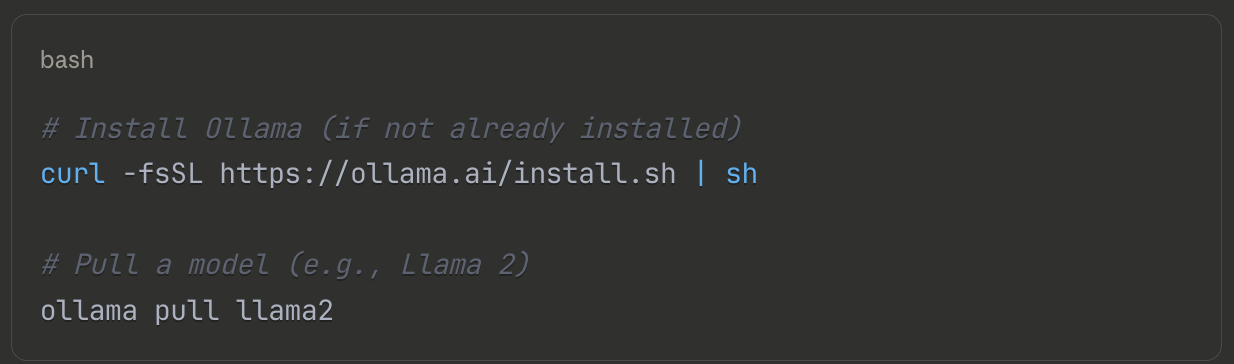
For development with local models using Ollama:
from pydantic import BaseModel
from pydantic_ai import Agent


# Define a structured response model

class WeatherResponse(BaseModel):

    temperature: float

    condition: str

    humidity: int


# Create an agent with a structured response

weather_agent = Agent(

    'openai:gpt-4',  # or 'ollama:llama2' for local models

    result_type=WeatherResponse,

    system_prompt="You are a helpful weather assistant. Always provide temperature in Celsius."

)

# Run the agent

async def get_weather():

result = await weather_agent.run("What's the weather like in London today?")

    print(f"Temperature: {result.data.temperature}°C")

    print(f"Condition: {result.data.condition}")

    print(f"Humidity: {result.data.humidity}%")


# For synchronous usage

import asyncio

asyncio.run(get_weather())
Official DocumentationGitHub RepositoryExamples and TutorialsPydantic Logfire IntegrationAs a custom software development company, we at Seaflux build scalable digital products that solve real business challenges. Our expertise spans custom AI solutions that automate tasks and improve decision-making, and chatbot development that enhances user engagement across platforms.
Looking for something more specific? We also provide custom chatbot solutions tailored to your business needs. As a trusted AI solutions provider, we deliver innovation from idea to implementation
Schedule a meeting with us to explore how we can bring your vision to life.

Junior Software Engineer