How to Build an AI-Powered Crypto Trading Platform in 2026
AI Bots for Automated Cryptocurrency Trading on Advanced Trading Platforms
In the fast-moving world of cryptocurrency, AI-driven trading bots have emerged as indispensable tools. The numbers reflect this shift. The AI crypto trading bot market is projected to reach $54 billion in 2026 and grow to $200 billion by 2035 at a 14% compound annual growth rate. The global algorithmic trading market is on track to double from $21 billion in 2024 to $43 billion by 2030. For companies building or upgrading trading platforms, the window to establish a technical advantage is now. By continuously scanning markets, executing orders, and adapting strategies, these bots help traders stay ahead—even while they sleep. This article unpacks how a crypto-trading platform infused with machine learning and advanced algorithms delivers precision, speed, and scalability. Automated crypto trading bots for crypto trading empower traders with autonomous strategies and real-time decision-making. These AI bots for crypto trading use advanced algorithms to analyze vast amounts of market data, enabling smarter, faster trades and optimizing entry and exit points. This innovative approach is a key driver of automated crypto trading, offering a new era of efficiency and accuracy for crypto traders. Crypto trading solutions powered by AI bots have become crucial for staying competitive in the dynamic world of digital assets.
Developing an AI-Powered Crypto Trading Platform with Automated Trading Solutions
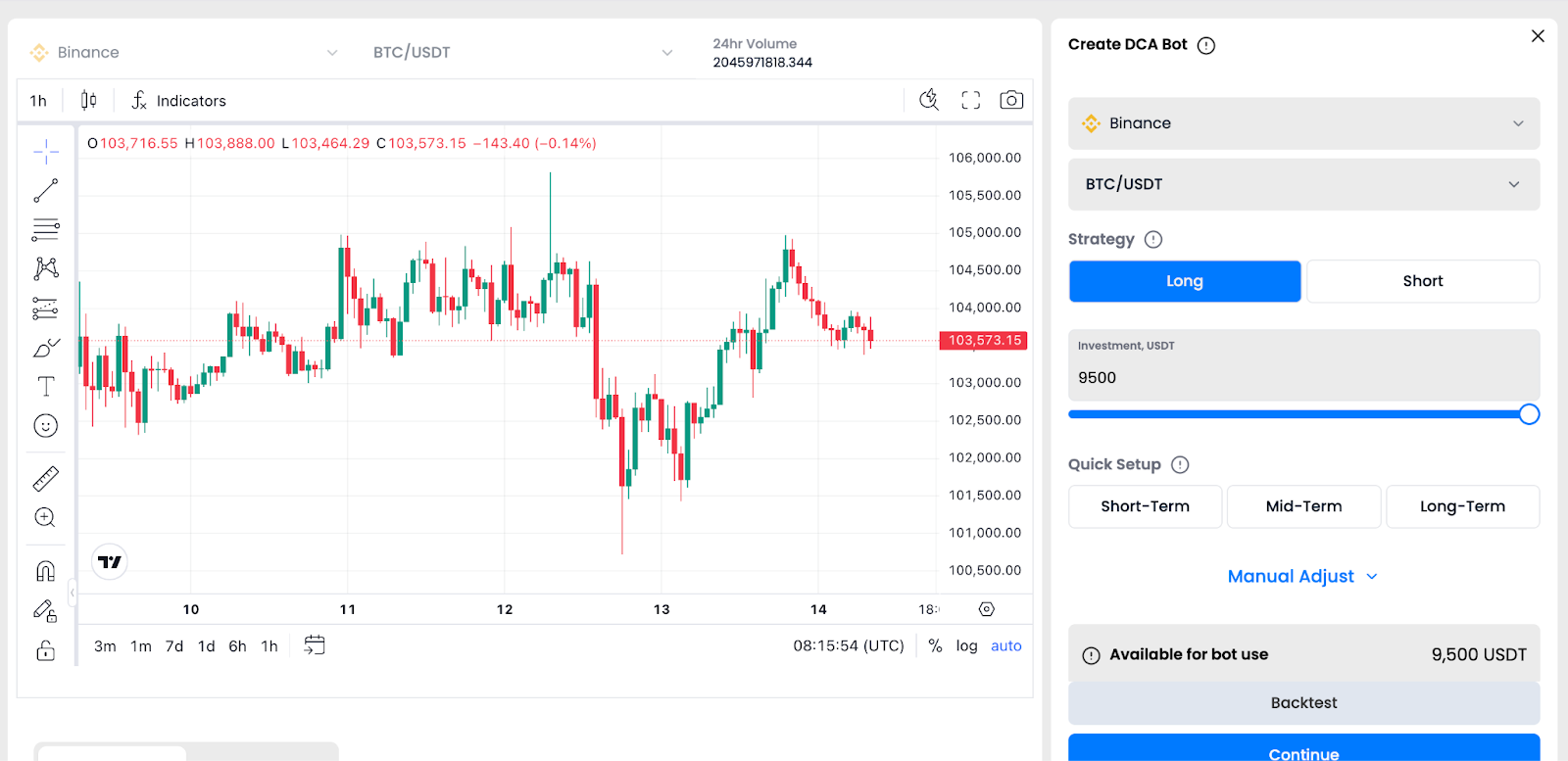
- Data Ingestion & Processing
- Aggregates real-time exchange feeds, blockchain on-chain metrics, and social-media sentiment.
- Normalizes diverse streams into a unified format for model training and inference
- Model Training & Deployment
- Utilizes reinforcement-learning agents that learn optimal trade actions by maximizing reward functions over time.
- Leverages echo-state networks and supervised fine-tuning on historical price data to boost performance
- Execution Engine
- Routes orders with sub-millisecond latencies to multiple exchanges via secure APIs.
- Ensures atomic execution and handles error retries automatically
- AI to Buy and Sell Crypto
- AI to buy and sell crypto enables automated cryptocurrency trading bots to make real-time decisions, capturing market opportunities instantly. With predictive algorithms, these automated crypto trading bots optimize entry and exit points, reducing manual intervention and providing traders with faster, more efficient trades in volatile markets.
- Monitoring & Feedback Loops
- Continuously tracks P&L, slippage, and error rates on dashboards (e.g., Grafana).
- Triggers model retraining when drift or performance degradation is detected
What are the Types of AI Trading Bots?

Momentum & Trend Following Bots Identify and trade on emerging price trends using pattern-recognition models trained on technical indicators. | 
Arbitrage Bots Exploit price gaps across exchanges by executing offsetting buy/sell- orders often within milliseconds |

Market-Making Bots Provide continuous bid/ask quotes,earning the spread while managing inventory risk through dynamic hedging. |

Reinforcement-Learning Agents Self-optimizing systems that adapt their strategies based on reward feedback outperform static rule-based bots over long horizons.
|
Top Features and Differentiators of an AI-Driven Crypto Trading Platform
| Feature | Why It Matters |
| Custom Strategy Builder | Empowers users to define parameters (risk limits, asset mix) and backtest against historical data. |
| Advanced Risk Controls | Automated stop-loss, take-profit, and portfolio rebalancing guard against extreme volatility. |
| Security & Compliance | Multi-factor authentication, encrypted API keys, and integrated KYC/AML modules build trust |
| Intuitive UI & Alerts | Real-time notifications via web, mobile, or Telegram keep traders informed of key events. |
Tech Stack for Building an AI Crypto Trading Platform
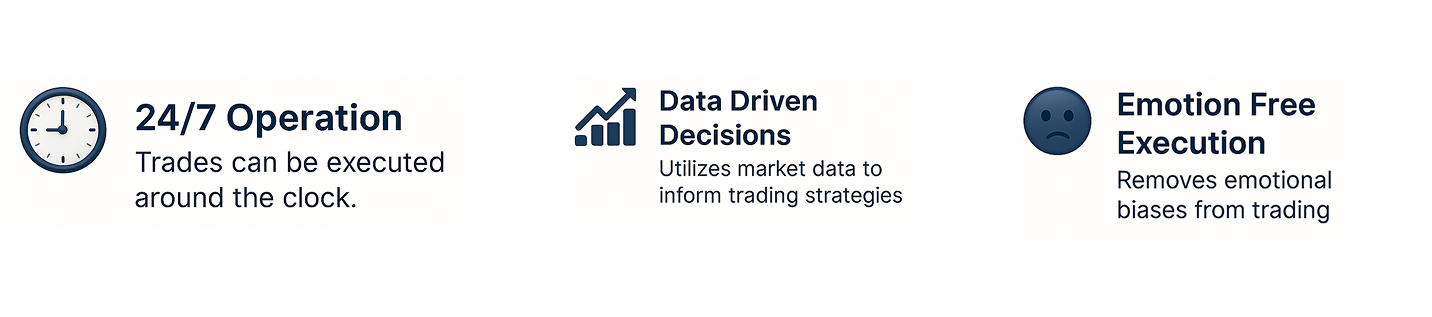
Key Benefits of AI Bots in Cryptocurrency Trading Platforms
How Long Does It Take and What Does It Cost?
Build timelines and budgets vary by scope, but based on production deployments these are the realistic ranges:
The biggest cost drivers are exchange integration complexity, regulatory compliance layer, and real-time data pipeline infrastructure. Teams that skip the compliance layer in early builds typically spend 40 to 60% more fixing it before launch.
What are the Challenges & Mitigation Strategies?
| Challenge | Mitigation |
| Algorithmic Bias | Regular audits with diverse training data sets; fairness checks |
| Security Vulnerabilities | Penetration testing, secure key storage, and hardened infrastructure |
| Regulatory Uncertainty | Built-in compliance workflows and transparent reporting to adapt to evolving frameworks. |
| Market Regime Changes | Ensemble models and online learning techniques to adjust strategies on the fly |
Regulatory Considerations for 2026
Regulation is no longer an afterthought for crypto trading platforms. In the European Union, the Markets in Crypto-Assets (MiCA) framework establishes uniform rules covering transparency, disclosure, authorization, and supervision for crypto-related activities. Platforms serving EU users must build compliance into the architecture from day one, not after launch.
Key requirements to address during development:
KYC and AML workflows must be integrated at user onboarding and at transaction monitoring layers. Audit trail logging must be immutable and retrievable for regulatory review. For platforms handling client assets, segregated wallet architecture and proof-of-reserve systems are increasingly expected by regulators in the UK, EU, and Singapore. In the US, FinCEN registration and state-level money transmission licensing apply to platforms that hold or transmit user funds.
Building a compliance layer as a module from the start reduces regulatory risk significantly and avoids the costly rebuild that most teams face when they try to add it later.
Top Examples of AI-Powered Crypto Trading Bots and Automated Trading Solutions
- Cryptohopper
Cloud-based AI platform where users reported up to 35% annual returns by combining pre-built strategies with market signals - 3Commas AI Grid Bot
Provides grid-trading strategies with built-in risk management, favored for its customizable parameters and ease of use - Numerai’s Open-Source Hedge Fund
Crowdsourced models are rewarded via the Numeraire token, blending decentralized data science with real money at stake - AI-Powered Crypto Trading Platform
We at Seaflux created an AI-powered platform that integrates multiple crypto exchanges, enabling seamless trading with real-time data, portfolio tracking, simulations, and AI bots for optimized strategies.
Future Trends and Innovations in AI-Powered Crypto Trading Solutions
- On-Chain Private Trading Bots
Zero-knowledge proofs are enabling a new generation of bots that execute on-chain while keeping strategy logic confidential. Traders can prove execution correctness without revealing their algorithms, which is valuable for institutional players protecting proprietary strategies in public blockchain environments. - AI Agent-Based Trading
In 2026 autonomous AI agents are moving beyond signal execution into full portfolio management. An agent can receive a high-level objective such as "maximize risk-adjusted yield across these five assets" and execute the full workflow including research, position sizing, order placement, and rebalancing without manual input at each step. The global AI agent market for DeFi trading is projected to grow from $5 billion in 2024 to $236 billion by 2034. - Multi-Modal AI Interfaces
Voice-activated and AR-driven dashboards are entering production for institutional traders. Rather than configuring bots through complex parameter forms, traders interact through natural language — adjusting strategies, reviewing performance, and triggering actions conversationally. - DeFi Integration & Liquidity Automation
Bots are increasingly managing positions autonomously across lending protocols, staking, and automated market makers, optimizing yields in real time across DeFi ecosystems without requiring user intervention per transaction.
Conclusion & Next Steps
AI-powered trading bots represent the cutting edge of crypto markets, combining relentless speed, data-driven precision, and round-the-clock operation. For startups and institutions alike, starting with a minimum viable automated crypto trading bot and iterating through live feedback is the fastest route to harnessing this technology. As you look to integrate crypto trading solutions into your platform, understanding the impact of AI bots for crypto trading will help you stay ahead in this fast-paced market.
Looking to integrate AI into your crypto-trading platform?
Reach out to our team at Seaflux, a leading fintech app development company, and discover how we can build, deploy, and optimize your next-generation automated trading bots. Through our expertise in automated trading platforms development, we can help you leverage the best crypto trading bots for your success. As your tech partner, we bring together hands-on experience in fintech, blockchain , and cloud infrastructure to build solutions that work in the real world. Whether you're rolling out a new crypto trading platform or improving what you’ve already built, we’ll help you stay ahead with smart, real-time features that keep up with the pace of the market. Got something in mind? Let’s chat— book a quick call with us ,here , we’d love to hear what you're working on.
Frequently Asked Questions (FAQ): Get the Answers You Need
What is an AI crypto trading bot?
An AI crypto trading bot is an automated software system that connects to cryptocurrency exchanges via API, analyzes market data in real time, and executes buy and sell orders based on predefined or machine-learning-driven strategies. Unlike manual trading, bots operate continuously, process multiple signals simultaneously, and execute trades in milliseconds. Modern AI bots go beyond rule-based logic by learning from historical patterns, adapting to market conditions, and incorporating sentiment analysis from news and social feeds.
How much does it cost to build a crypto trading platform?
The cost to build an AI crypto trading platform depends on scope. A focused MVP connecting to one exchange with basic bot logic typically ranges from $30,000 to $60,000 and takes 6 to 8 weeks. A multi-exchange platform with several bot types and an admin panel ranges from $80,000 to $150,000 over 3 to 5 months. A full production platform including compliance layers, simulation mode, and portfolio management can reach $150,000 to $300,000 or more over 6 to 9 months.
How long does it take to develop a crypto trading bot?
Development timelines vary based on complexity. A single-exchange bot with basic strategy logic can be built in 6 to 8 weeks. A platform supporting multiple exchanges, multiple bot types, and real-time dashboards typically takes 3 to 5 months. Enterprise platforms with full compliance layers, backtesting infrastructure, and admin systems generally require 6 to 9 months. The compliance and data pipeline layers are the most time-intensive components and should be scoped early to avoid delays later in the build.
Is it legal to use AI bots for crypto trading?
In most jurisdictions, using AI bots for crypto trading is legal. However, the legal requirements depend on who the platform serves and where it operates. Platforms handling client funds must comply with KYC and AML regulations. In the European Union, the MiCA framework requires authorization, transparency, and disclosure for crypto-related services. In the United States, FinCEN registration and state-level money transmission licensing apply to platforms holding or transmitting user funds. Platforms trading only proprietary capital face lighter obligations than those serving retail or institutional clients.
What types of AI bots can be built into a crypto trading platform?
The most common bot types in production platforms today include arbitrage bots that exploit price differences across exchanges, grid bots that place buy and sell orders at intervals to profit from volatility, DCA bots that accumulate positions at regular intervals regardless of price, trend-following bots that track momentum signals, and market-making bots that provide liquidity by maintaining continuous bid and ask orders. More advanced platforms include reinforcement learning bots that adapt strategies based on live market feedback and multi-agent systems that coordinate across multiple trading pairs simultaneously.
What programming languages are used for crypto trading bot development?
Python is the most widely used language for AI model development, strategy logic, and data processing in crypto trading platforms due to its mature ML libraries including TensorFlow and PyTorch. Node.js and Go are preferred for the execution layer where sub-millisecond order routing is required. Solidity is used for smart contracts in DeFi-integrated bots. The CCXT library provides unified API access across 100+ crypto exchanges, making it a standard component in multi-exchange platform builds. Infrastructure is typically deployed on AWS or Google Cloud using Docker and Kubernetes for scalability.
Can AI trading bots guarantee profits in crypto?
No AI trading bot can guarantee profits in cryptocurrency markets. Markets are inherently volatile and unpredictable, and no model can eliminate that uncertainty. What AI bots do well is enforce trading rules consistently, execute without emotional bias, process more data than any human analyst, and react to market movements faster than manual trading allows. Platforms that claim guaranteed returns or fixed daily profit percentages should be treated with caution. The value of a well-built AI trading bot is improved execution discipline and risk management, not guaranteed outcomes.
What compliance requirements apply to crypto trading platforms in 2026?
Compliance requirements vary by jurisdiction and business model. The EU MiCA framework mandates authorization, transparency, and disclosure for crypto-asset service providers operating in European markets. In the United States, FinCEN registration applies to platforms handling user funds, and state-level money transmitter licenses may be required depending on operational territory. Platforms serving retail clients globally must implement KYC at onboarding and ongoing AML transaction monitoring. Audit trail logging must be immutable and retrievable for regulatory review. Building the compliance layer as a module from the start is significantly more cost-effective than retrofitting it after launch.

Krunal Bhimani
Business Development Executive