PropTech Trends 2026: How AI and Smart Buildings Are Reshaping Real Estate
In 2024, most real estate companies were still experimenting with AI.
In 2025, they started integrating it into operations.
In 2026, the conversation has changed completely.
Now the question is not “Should we adopt new technology?”
Instead it is “Which systems will actually reduce operational cost before our competitors move faster?”
This is because real estate technology is entering a very different phase now. The evolution of AI in real estate 2026 is now focused far more on operational intelligence, smart building technology, and infrastructure scalability than isolated automation tools.
The industry is moving away from isolated software tools and surface-level automation toward connected operational ecosystems where AI, IoT, cloud infrastructure and predictive systems work together continuously. Strong PropTech infrastructure is now becoming the foundation that enables these systems to operate efficiently at scale. And the companies still operating on fragmented infrastructure are about to face a much bigger problem than slow operations.
They are building future tech debt faster than they realize. That’s the real story behind the biggest proptech trends 2026. The next generation of real estate operations and AI property management strategies will not be defined by who has the most software. It will be defined by who has the most connected infrastructure.
Generative AI is not the real shift
Last year, most PropTech conversations revolved around generative AI.
Chatbots, automated communication, AI-generated reports, leasing assistants.
Those systems improved workflow speed, but they still depended heavily on human instruction. The bigger operational shift happening now is Agentic AI. This is where AI in real estate becomes operationally transformative rather than assistive. Agentic systems do not simply generate responses. They coordinate workflows autonomously. This rise of agentic AI in real estate is fundamentally changing how modern property operations function.
Instead of waiting for manual instructions, systems can now:
- Trigger maintenance workflows
- Prioritize leasing approvals
- Coordinate tenant onboarding
- Escalate operational risks
- Rebalance energy systems dynamically
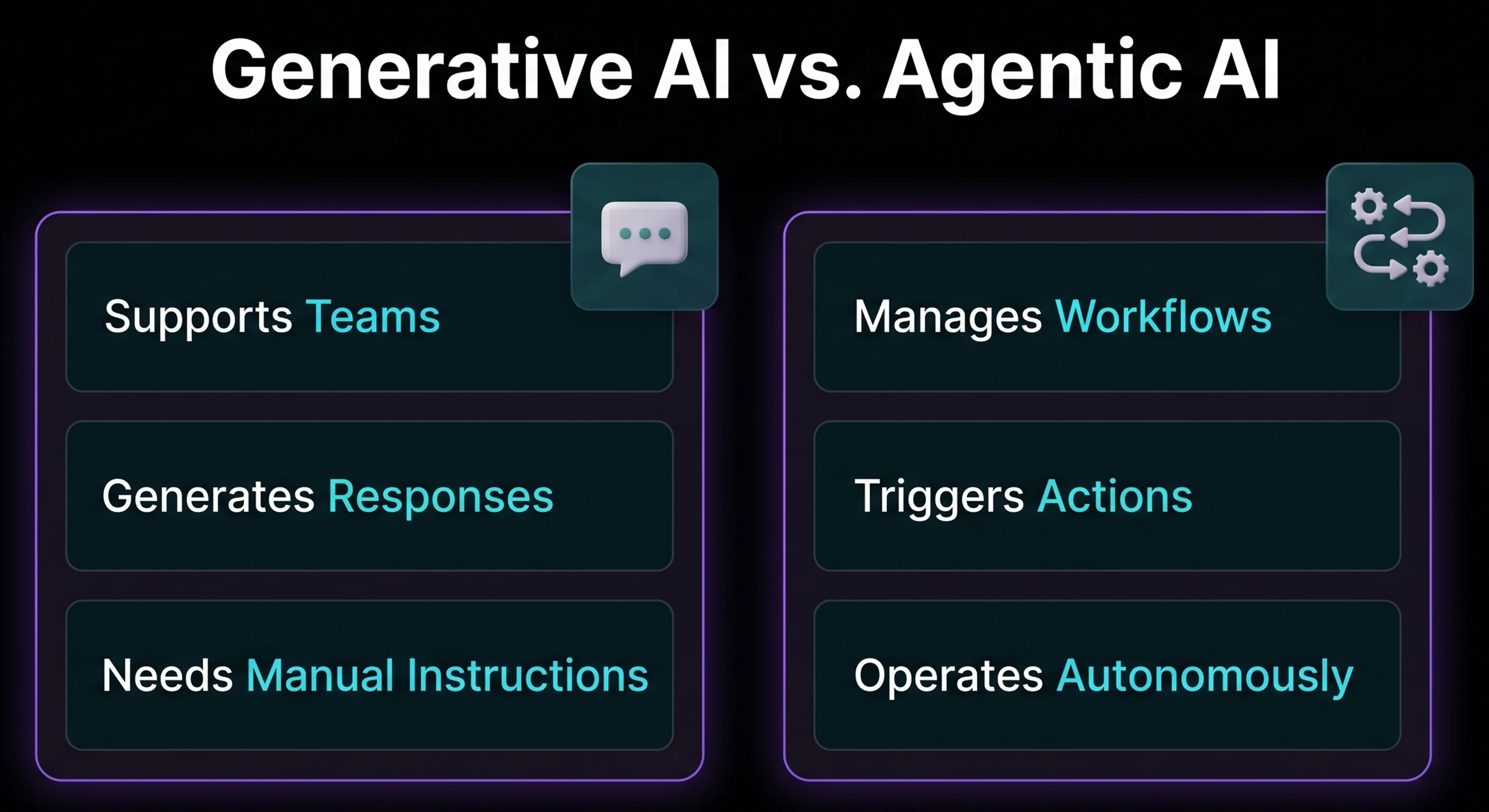
The difference is subtle technically but massive operationally. Generative AI supports teams. Agentic AI actively manages operational sequences. And for large property portfolios, that changes staffing efficiency, operational speed and scalability dramatically while creating measurable improvements in real estate operational efficiency and property management automation.
Fragmented systems are becoming the biggest liability
Most real estate businesses already use multiple operational platforms:
- Property management systems
- Leasing software
- IoT monitoring tools
- Financial systems
- CRM environments
- Tenant communication platforms
The problem is that most of them still operate independently.
This fragmentation creates operational blind spots:
- Delayed maintenance visibility
- Duplicate tenant records
- Inconsistent reporting
- Slower decision-making
- Weak forecasting accuracy
And this becomes dangerous as AI systems become more dependent on connected operational data. Because disconnected systems don’t just slow operations anymore. They weaken future AI scalability completely. This is why interoperability and scalable PropTech infrastructure are becoming some of the most important priorities in modern PropTech and a defining factor in PropTech trends 2026.
Smart buildings are becoming operational data engines
The biggest shift in smart building technology 2026 is not automation alone. It is continuous operational visibility.
Modern buildings are increasingly generating live infrastructure data through:
- HVAC systems
- Occupancy sensors
- Smart access controls
- Energy monitoring systems
- Water usage sensors
- Environmental monitoring devices
Individually, these systems provide useful operational signals. But their real value appears when connected into unified data environments. This is where IoT infrastructure becomes strategically valuable.
Because once buildings continuously generate operational intelligence, property teams can optimize:
- Energy usage
- Maintenance scheduling
- Occupancy efficiency
- Asset lifespan
- Operational cost
In real time.
And unlike cosmetic smart building upgrades, these optimizations create measurable financial impact very quickly while significantly improving proptech operational efficiency and supporting scalable real estate AI automation initiatives.
Predictive maintenance is replacing reactive property operations
Traditional maintenance systems wait for something to fail. That model is becoming too expensive.
Modern predictive maintenance IoT systems continuously monitor equipment behavior across building infrastructure:
- HVAC performance
- Elevator stress patterns
- Water system irregularities
- Power fluctuations
- Equipment vibration signals
The system identifies failure patterns before breakdowns occur operationally. This changes property management economics significantly.
Instead of:
- Emergency repairs
- Tenant complaints
- Unplanned downtime
- Reactive vendor coordination
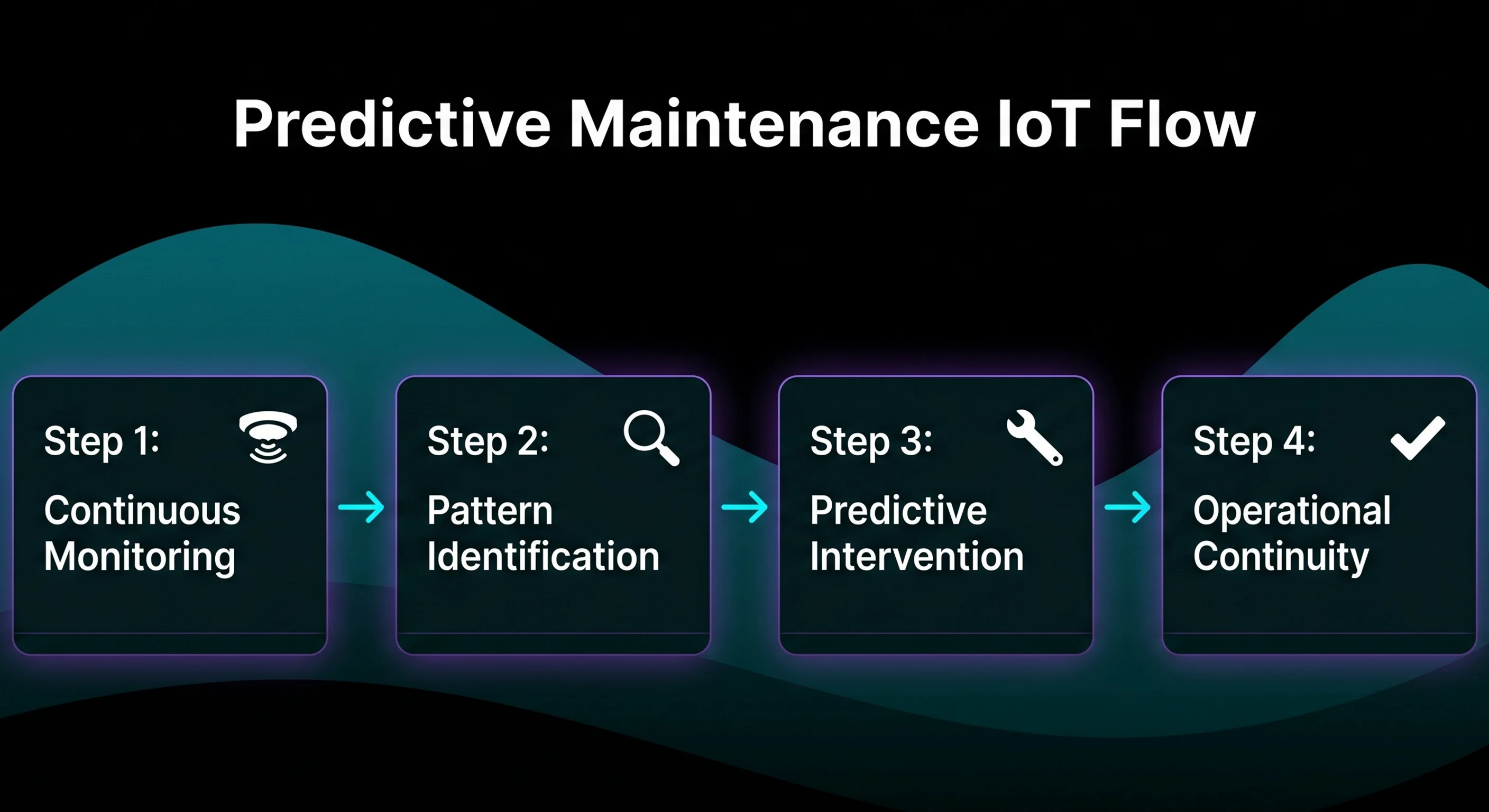
Teams shift toward planned intervention and operational continuity.
For large commercial portfolios, this reduces both maintenance cost and tenant dissatisfaction simultaneously while strengthening long-term real estate operational efficiency.
Snowflake-driven data lakes are becoming the operational core
One of the biggest architectural changes happening inside PropTech is centralized operational data infrastructure. Many companies still operate through disconnected reporting systems spread across departments. That approach breaks AI scalability.
Modern real estate environments increasingly rely on cloud-native data lakes powered through platforms like Snowflake to unify:
- Tenant activity
- Building performance
- Leasing operations
- Financial reporting
- Maintenance data
- IoT infrastructure signals
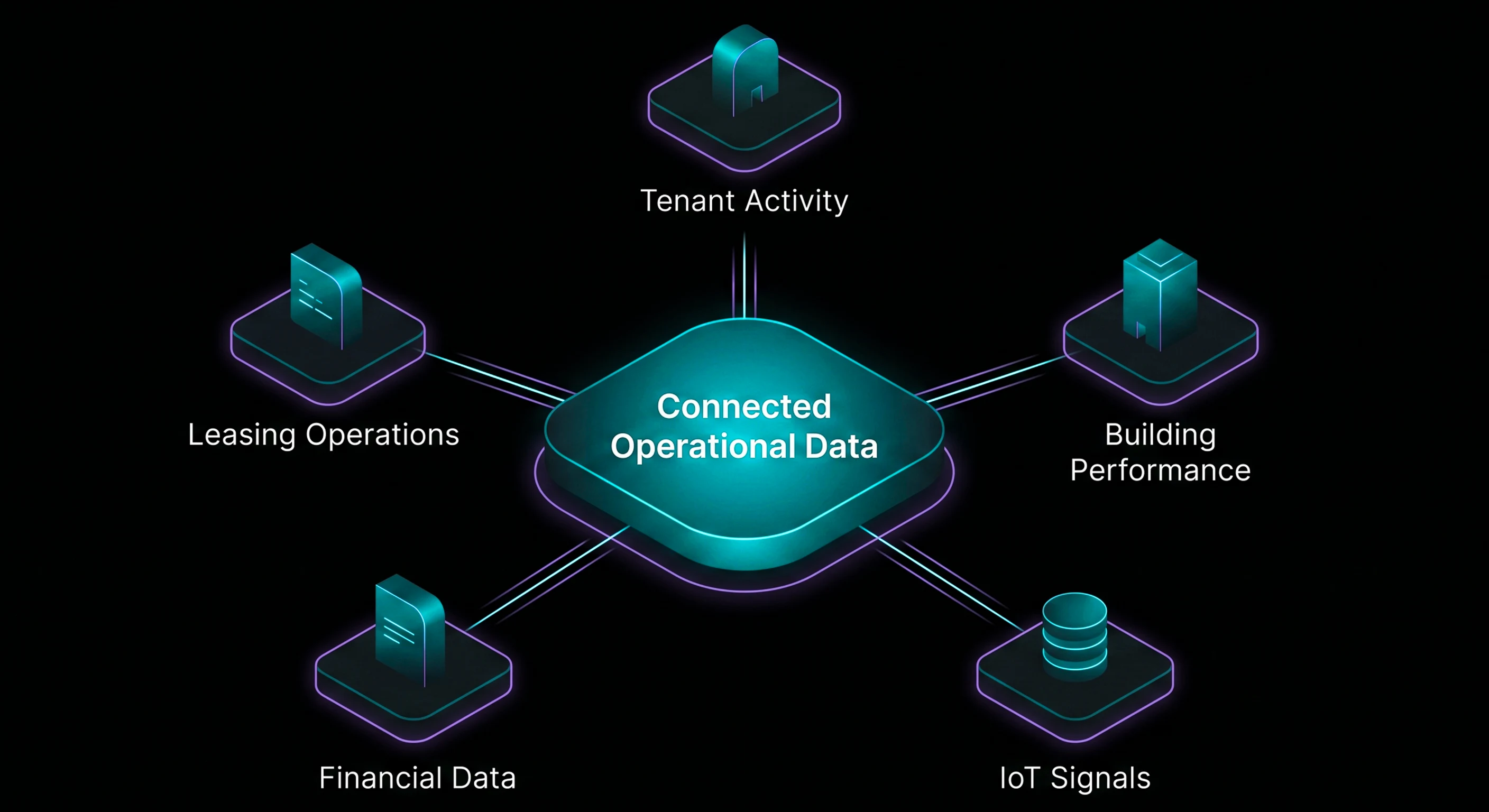
This creates a shared operational environment where AI systems can function consistently across the business. Without this foundation, AI systems struggle because data remains fragmented and inconsistent. This is why data engineering is quietly becoming one of the most important investments in real estate modernization and modern real estate technology trends.
Digital twins are moving from concept to operational reality
For years, digital twins were discussed mostly as futuristic visualization tools.
That’s changing quickly.
Modern digital twins property management systems and real estate digital twin environments now function as operational simulation platforms.
A digital twin creates a live operational replica of a building or property portfolio.
Property teams can simulate:
- Energy consumption behavior
- Occupancy fluctuations
- Maintenance scenarios
- Infrastructure stress
- Emergency response workflows
Before implementing changes in the real environment.
This creates enormous operational advantages for large-scale portfolios where infrastructure decisions impact cost significantly.
The biggest value is not visualization.
It’s predictive operational planning.
Blockchain adoption is becoming more selective
One of the most misunderstood areas in PropTech is blockchain. Many early implementations focused heavily on hype without solving meaningful operational problems. The practical shift now is toward targeted use cases inside blockchain real estate transactions.
The technology is becoming useful where it improves:
- Transaction transparency
- Smart contract execution
- Ownership verification
- Auditability
- Cross-party trust
Especially in complex transaction ecosystems involving multiple stakeholders. But most successful companies are implementing blockchain selectively rather than rebuilding entire operational environments around it. That distinction matters because infrastructure practicality now matters more than trend adoption within PropTech trends 2026 and broader real estate technology trends.
SaaS fragmentation is creating future operational debt
One major issue emerging across real estate operations is SaaS overload.
Many businesses adopted separate tools rapidly over the last few years.
One for leasing, another for maintenance, another for analytics, another for tenant engagement.
Initially, this feels efficient.
Over time, it creates operational fragmentation and integration dependency. This is why custom cloud-native ecosystems and cloud-native proptech environments are becoming increasingly important.
Strong modern PropTech infrastructure prioritizes:
- Shared operational data
- Flexible integrations
- Unified visibility
- Scalable architecture
- Continuous interoperability
Instead of isolated software environments that struggle to communicate effectively. Because future AI systems and AI property management ecosystems require connected operational environments to function properly at scale. Stronger PropTech interoperability also helps reduce long-term integration complexity and operational inefficiencies.
Budget efficiency is now tied directly to architecture quality
One of the biggest changes happening in 2026 is how executives evaluate technology spending.
The conversation is shifting from “What software should we buy?”
To “What operational inefficiency are we reducing permanently?”
This changes investment priorities completely.
Strong infrastructure decisions now focus on:
- Reducing long-term integration cost
- Preventing duplicate operational systems
- Improving interoperability
- Lowering future migration risk
- Supporting scalable AI deployment later
This is why cloud-native architecture and clean operational data are becoming strategic assets rather than technical upgrades. Because poor interoperability today creates massive scaling problems tomorrow. Modern cloud-native proptech strategies are increasingly focused on solving these long-term scalability challenges.
The companies moving fastest are simplifying operations
The most effective PropTech companies are not necessarily implementing the most technologies. They are reducing operational friction most intelligently.
They understand that:
- AI depends on clean data
- Automation depends on interoperability
- Scalability depends on architecture
- Operational efficiency depends on system coordination
That’s the real direction of proptech trends 2026.
Where Seaflux sets
At Seaflux, PropTech modernization is approached through connected operational ecosystems rather than isolated software deployments. As a custom software development company, Seaflux builds scalable proptech solutions and custom real estate solutions focused on long-term operational efficiency.
Through AI & Machine Learning, Data Engineering and custom cloud solutions, Seaflux helps real estate businesses support:
- Agentic AI workflows
- Connected IoT ecosystems
- Predictive operational systems
- Cloud-native scalability
- Unified data infrastructure
As an AI development services provider, Seaflux focuses on improving interoperability, reducing operational fragmentation and enabling scalable AI-driven real estate environments without unnecessary technical debt.
Explore more here at Seaflux Real Estate Solutions or schedule a meeting with us to discuss your real estate technology goals and digital transformation strategy.
End thought
The biggest technology risk in real estate is no longer falling behind trends. It is building disconnected systems that become impossible to scale later. Because the future of PropTech and emerging real estate technology trends will not belong to companies with the most tools.
It will belong to companies whose infrastructure can evolve continuously without operational friction. And that starts with interoperability now before AI dependency becomes impossible to untangle later.
Do not build another fragmented PropTech stack that creates more operational complexity every year. Build connected infrastructure where AI, IoT, analytics and property operations work from the same operational intelligence layer.
This is because in 2026, scalable real estate technology and real estate AI automation are about making every system work together intelligently.

Hardik Dangodara
Business Development Manager