
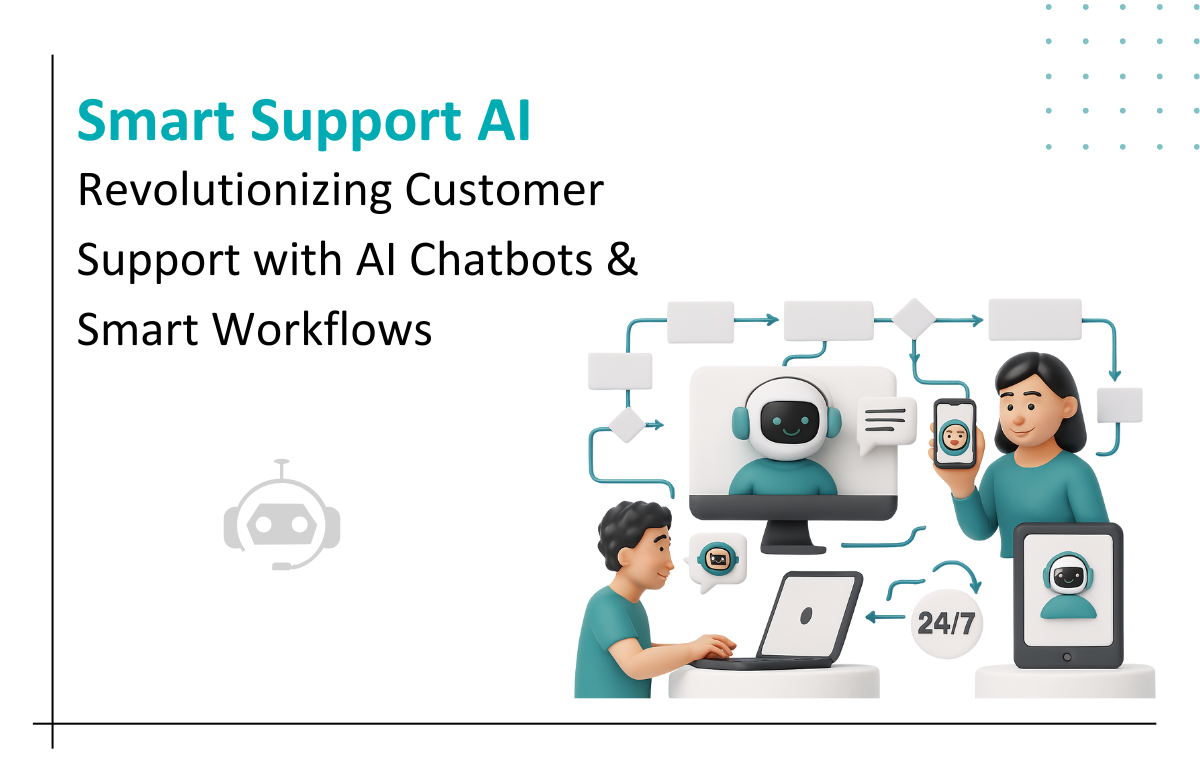
Customer expectations have changed dramatically in today's fast-paced digital economy. Customers expect instant response, service at any time, service at any place, and service that is personalized, and this current customer service expectation is traditional. The old model of customer service finds it difficult to maintain each of these customer expectations, resulting in longer calls, increased operational costs, and variability in customer experience.
Enter AI chatbots for customer service with artificial intelligence and intelligent workflows, which are changing customer experience from the experience being time-consuming for the customer or an experience made easy for the customer who feels accomplished before even speaking with a customer service representative. This is not only annoying if the process that needs to be completed is repetitive, but it also makes it easier to work through. Conversational AI for customer service is at the heart of this transformation, enabling interactions that are faster, more accurate, and more personalized than ever before.
Automating customer support is becoming a necessity for anyone wishing to stay competitive in business, not just a nice-to-have option. Thanks to developments across natural processing (NLP), machine learning in customer support, and intelligent workflow automation, businesses are now able to manage thousands of customer inquiries at the same time without reducing the quality of service.
As a matter of fact, a study by world-famous research firm Gartner recently reported that by 2027, almost 70% of all customer interactions will include an AI-enabled tool such as AI chatbot automation, voice agents, or automated workflows. This won't take away their human agents. It will only enable them to focus on higher-value and more complex work, while AI processes the regular inquiries and puts away the everyday problems to optimize the customer experience. Business process automation plays a critical role here, ensuring that backend operations run smoothly and consistently.
AI chatbots for customer service are the first response systems for consumers when they have a question, want information, or want to take action, like track an order or submit a ticket. Today's chatbots are powered by conversational AI for customer service and Large Language Models (LLMs) that are able to understand intent, context, and tone, which facilitates interaction that 'feels' like a conversation with a human.
Key Capabilities:
Example:
A telecom provider’s AI chatbot for customer support can handle bill inquiries, network complaints, or plan upgrades autonomously, reducing call center load by up to 60%, thanks to effective customer service automation.
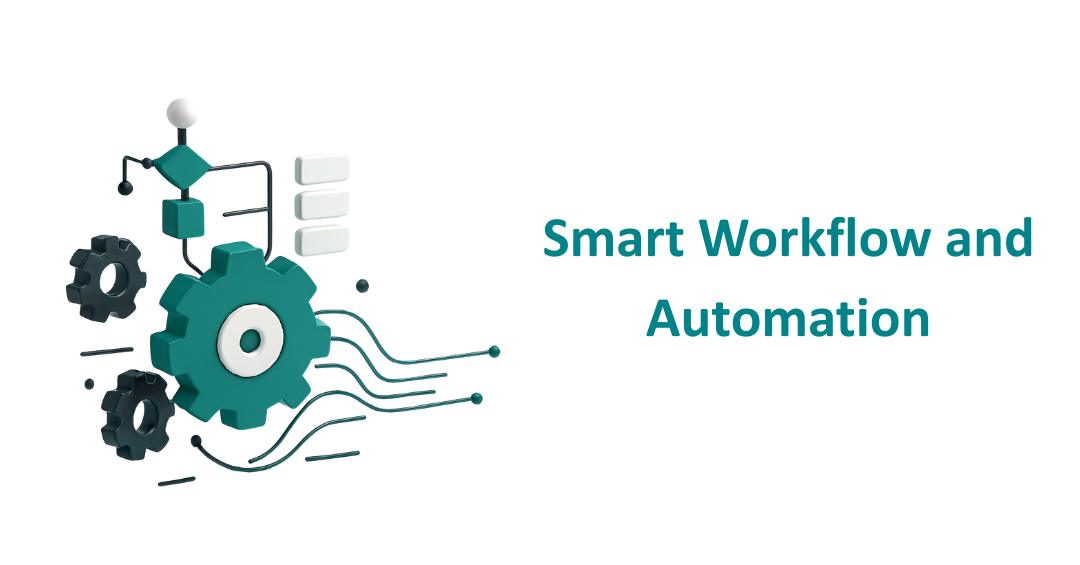
Chatbots facilitate the conversation while smart workflows make sure that all of the processes behind the scenes are being automated, so the conversation is effective. Smart workflows connect systems, CRM, ticketing tools, databases, and communication channels that will make the processes work effectively and consistently. Business process automation ensures that these workflows execute tasks efficiently, minimizing errors and delays.
How They Work:
Example:
In an e-commerce setup, a “refund request” chatbot can trigger a backend workflow to verify the order, process the refund, and notify the customer automatically, demonstrating how AI customer service solutions streamline operations.
The synergy between chatbots and smart workflows creates a seamless, end-to-end customer support system.
This integration not only boosts efficiency but also ensures consistency across all touchpoints, showcasing the power of customer service automation.
| Industry | Use Case | Impact |
| E-commerce | Order tracking, returns, product recommendations | Faster responses and higher conversion rates |
| Banking & Fintech | Balance inquiries, fraud alerts, and KYC verification | Secure and compliant support |
| Healthcare | Appointment booking, prescription reminders | Improved patient engagement |
| Travel & Hospitality | Booking management, itinerary changes | Reduced cancellations and improved retention |
| Telecom | Plan upgrades, network complaints | Reduced call center volume |
As Generative AI, voice-enabled assistants, and predictive workflows develop, it’s likely that customer support will evolve to be much more proactive. Businesses will move from reactive problem-solving to providing anticipatory service deliveries- anticipating needs before they arise.
Technologies such as n8n, Microsoft Power Automate, and AI chatbot automation powered by OpenAI will play a central role in creating intelligent support ecosystems that incorporate automation, empathy, and intelligence all into one experience, forming the next generation of AI customer service solutions. AI chatbots in eCommerce will continue to transform online retail by providing fast, personalized, and scalable customer interactions.
Seaflux is a trusted AI solutions provider specializing in customer service automation. Our AI chatbots and intelligent workflow solutions streamline support processes, reduce response times, and deliver personalized experiences at scale.
Ready to elevate your customer experience and optimize operations?Schedule a meeting. with us today to explore our AI chatbot automation and smart workflow solutions for your business.

Business Development Executive