 Retail & E-commerce
 USA
USA 2 Weeks
Azure Blue-Green and Zero Downtime Deployment for SaaS Architecture
Boost SaaS performance with Azure traffic manager, blue-green deployment, PostgreSQL flexible server, and deployment best practices for zero downtime migration.
Overview
At A Glance
Industry
Retail & E-commerce
Region
USA
Duration
2 Weeks
Technical Stack
 PostgreSQL
 AzureVM
 Azure Traffic Manager
 Azure Resource Group
 Azure Load Balancer
 Microsoft Azure Cloud
 Elasticsearch
Client Profile
Based in the USA, the client is a PaaS provider offering a comprehensive B2B online portal, software platform, transaction engine, and secure digital marketplace.
Challenge
- Zero-Downtime Deployment Requirement
The client needed to deploy an all-new platform smoothly, without any downtime or impact on existing users, making zero-downtime deployment a critical objective.
- Limited User Testing Prior to Rollout
They would like to have the option to test the new platform with a small group of users prior to a broad-scale deployment of the new platform, to avoid impacting the user experience.
- Need for A/B Performance Comparison
The client required A/B testing between the current and new platforms to understand which version performed better..
- Lack of Internal Bandwidth
There were no internal resources available to handle database management, performance monitoring, resource allocation, database deployment, and system administration during deployment.
- Requirement for a Reliable Deployment Strategy
A structured Azure blue-green deployment architecture was necessary to ensure controlled updates and reliable parallel environments within the existing SaaS architecture, highlighting the need for streamlined Azure deployment automation to reduce manual workloads.
Solution
- Dual Production Environments on Azure
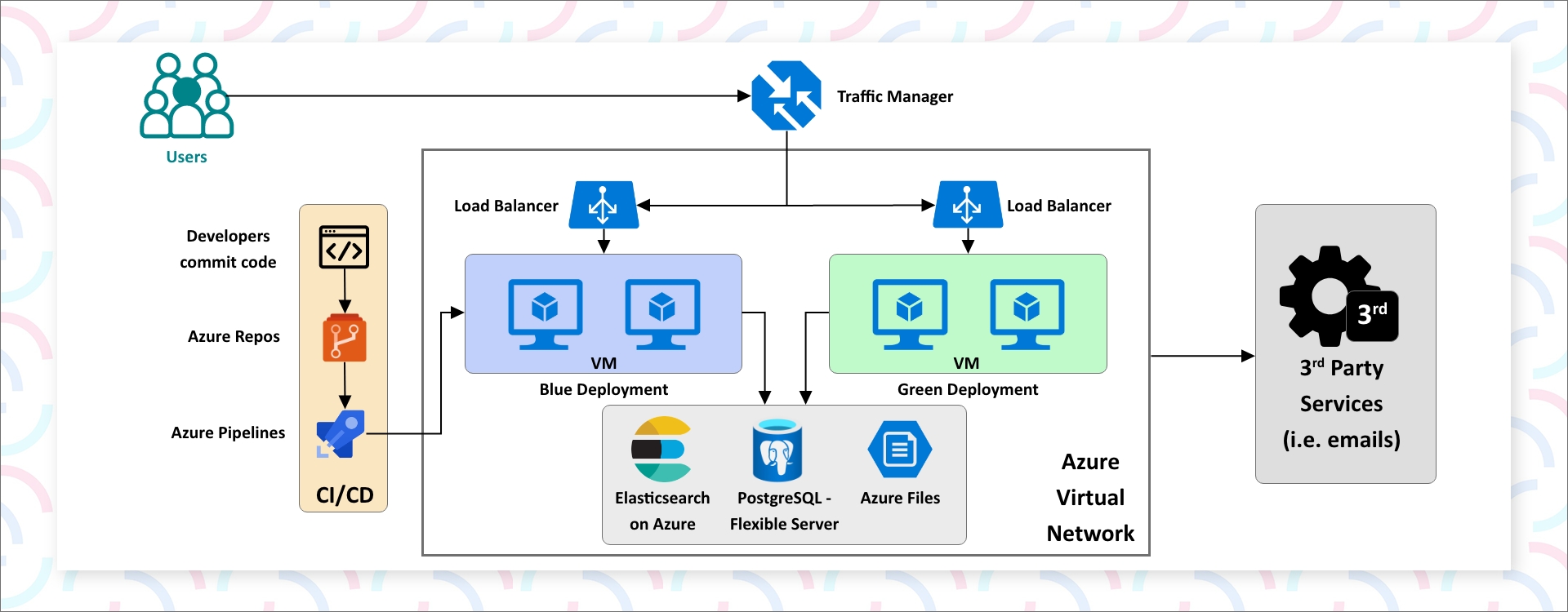
Seaflux created two separate production environments, Blue (current version) and Green (new version), forming the foundation of an Azure blue-green deployment approach.
- Blue-Green Deployment with PostgreSQL Flexible Server
The new platform was deployed using the blue-green method, leveraging PostgreSQL Flexible Server for better customization, control, and scalability, ensuring adherence to deployment best practices across infrastructure and database layers.
- Controlled Traffic Routing for Initial Testing
Using Azure Traffic Manager and Load Balancer, only 10% of user traffic was initially routed to the green environment for safe testing and quick rollback if needed.
- Gradual Traffic Shift for A/B Testing
After stability was ensured, 50% of the traffic was diverted to the green deployment to compare performance with the blue environment through precise Azure load balancer routing.
- Complete Migration After Performance Validation
Once the analysis confirmed the better-performing platform, the entire user traffic was shifted to the optimal environment, completing the zero-downtime migration successfully
Key Benefits
- 100% Uptime During Deployment
The platform was released smoothly without any downtime, demonstrating the success of zero-downtime deployment strategies.
- Built-In Rollback and Disaster Recovery
Replaced the earlier 25–30 second wait time, boosting customer satisfaction and contributing to a strong Azure disaster recovery architecture.
- Enhanced Scalability and Security
Enhanced trust and provided users with immediate reassurance of their policy purchase.
Develop Your Idea
Let’s transform your idea into a real product with scalable solutions.