 Healthcare
 USA
USA 12 Weeks
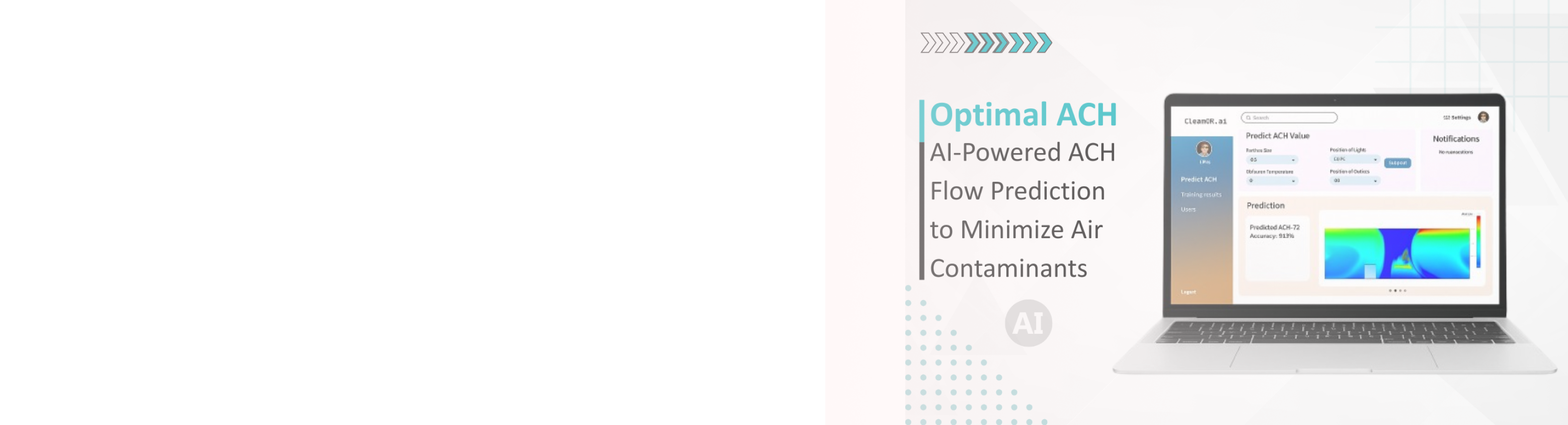
AI-Powered Hospital Ventilation System for Airflow Optimization and Infection Control
AI-powered hospital ventilation solution ensuring optimal air changes per hour, energy consumption reduction, and advanced HVAC infection control compliance.
Overview
At A Glance
Industry
Healthcare
Region
USA
Duration
12 Weeks
Technical Stack
 TensorFlow
 Python
 AWS
AWS FastAPI
 ReactJS
Client Profile
This client is a long-established engineering and management consulting firm located in California, which has comprehensive experience developing custom solutions in the healthcare sector. They have a significant depth of experience with contemporary technology to enhance patients' safety and care quality and operational efficiency in hospitals and clinics, particularly in optimizing hospital ventilation systems and strengthening HVAC infection control measures.
Challenge
The client had an important challenge of consistently having surgical rooms that could be classified as safe and free of contaminants. They required a means to calculate the Optimal ACH (Air Changes per Hour) for air flow with the intention of minimizing the risk of airborne particles resulting in healthcare-associated infections while also contributing to energy consumption reduction in hospital environments.
Specifically, the client sought:
- Accurate prediction of airflow: Using pre-trained data to determine the ideal ACH that could reduce the concentration of harmful particles like COVID-19 and the Zika virus in the air, based on optimized air changes per hour values to aid hospital infection prevention.
- 3D room modeling: An illustrated view of the surgical rooms that could be evaluated for each air inlet and outlet location while maintaining adequately sized and configured spaces for both air quality and energy consumption reduction, ensuring balanced ACH flow throughout the room.
- Cloud-based solution: A fully cloud-hosted solution that meets HIPAA compliance for sensitive healthcare data management, helping hospitals maintain secure and traceable systems critical to healthcare infection control.
- Dynamic control by AI: The system needs the ability to range the airflow continuously based on characteristics such as particle size, temperature, light position, or type of surgery to maintain the air quality estimates and ideal air changes per hour in real time, further enhancing healthcare infection control effectiveness.
Solution
Seaflux designed and implemented a comprehensive AI-based platform to meet the client’s requirements:
- Merge AI and ML: A combination of the existing data and data simulated from OpenFOAM (computational fluid dynamics tool/resolving), an artificial neural network (ANN) was trained and used to accurately predict the optimal ACH for the various room configurations and operating conditions, improving the efficiency of hospital ventilation systems.
- Cloud Deployment: Built on AWS, the platform provides a highly scalable cloud infrastructure while ensuring that HIPAA regulations on data security and privacy are adhered to, aligning with hospital safety and hospital infection prevention standards.
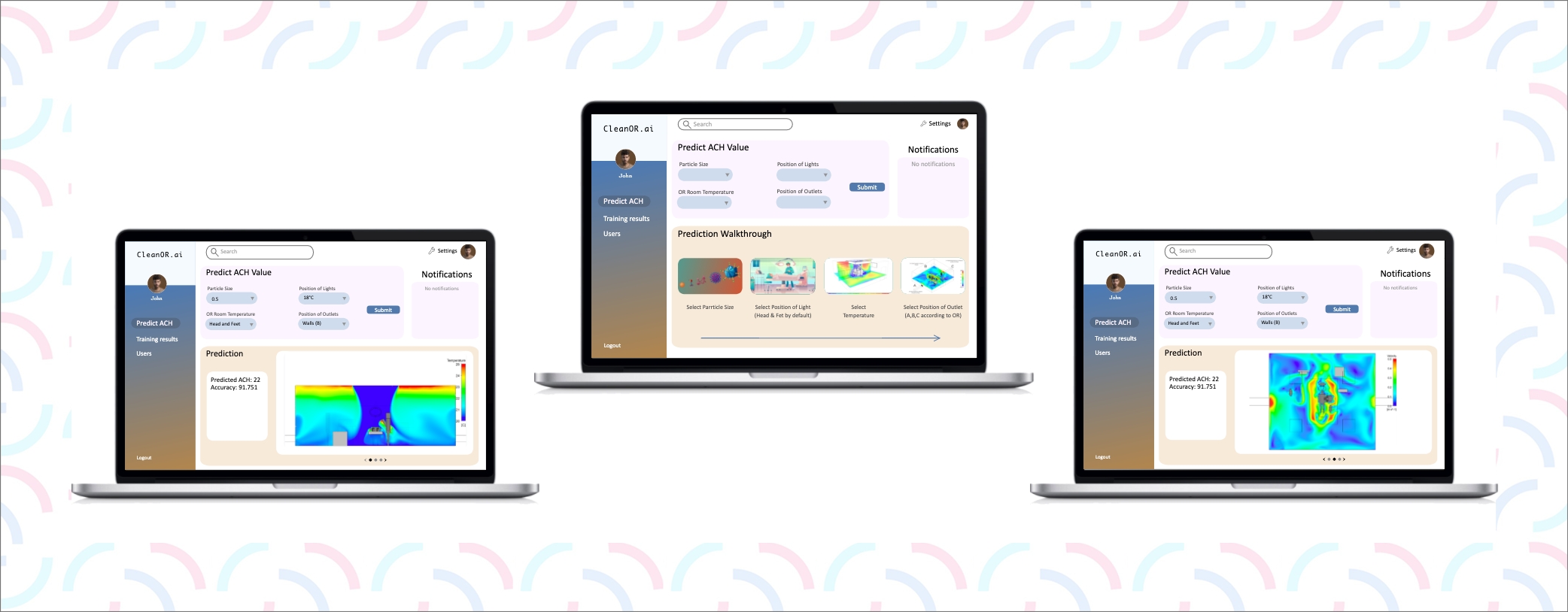
- 3D Room Model Simulation: Users are able to enter room-based parameters, including particle size, temperature, surgery type, and outlet location, onto a 3D model to calculate optimal ACH, contributing to precise ventilation design, energy consumption reduction, and the regulation of efficient ACH flow in different hospital zones.
- Real-time Optimization: The ANN algorithm continuously monitors these variables, compares them with real-time room conditions, calculates the optimal ACH, and automatically adjusts airflow to maintain a contaminant-free environment designed to reduce airborne contamination in surgical spaces through continuous airflow optimization.
Key Benefits
- Reduced Illness for Healthcare Workers: While optimal airflow has been maintained in the surgical rooms, there has been a 12% reduction in sick time fulfillment amongst healthcare workers, establishing a safer environment for staff, and improving overall efficiency of operation by helping to reduce airborne contamination in clinical areas.
- Lower Operational Costs: With precise ACH adjustments, the system optimized energy consumption of the airflow systems, resulting in a 37% reduction in power usage, which translates into significant cost savings for the hospital operations and enhanced hospital ventilation efficiency.
- Enhanced Environmental Control: The AI-driven monitoring ensures that room conditions such as particle concentration, temperature, and light are consistently optimized, providing a safer environment for both patients and staff by maintaining proper operating room air changes per hour in real time.
- Data-Driven Decision Making: The cloud-based system enables hospitals to leverage historical and real-time data for predictive analytics, improving long-term planning and operational efficiency. With HIPAA-compliant cloud solutions, hospitals can confidently manage sensitive healthcare data while maintaining operational agility.
Develop Your Idea
Let’s transform your idea into a real product with scalable solutions.