NLTK vs spaCy - Python based NLP libraries and their functions
Quick Answer: spaCy vs NLTK
The main difference between spaCy and NLTK is speed versus flexibility. spaCy is a fast, production-ready library built in Cython, with an opinionated pipeline and pre-trained models, making it the better choice for real-world applications. NLTK is a slower, string-based toolkit built for research and education, giving developers access to a wide range of swappable algorithms rather than one fixed pipeline.
In short: choose spaCy for speed and production use, choose NLTK for flexibility and learning how NLP techniques work under the hood.
Natural Language Processing (NLP) Introduction
NLP, a part of data science, aims to enable machines to interpret and analyze the human language and its emotions to manipulate and provide good interactions. With useful NLP libraries around, NLP has searched its way into many industrial and commercial use cases. Some of the best libraries that can convert the free text to structured features are NLTK, spaCy, Gensim, TextBlob, PyNLPI, CoreNLP, etc.
From the above libraries, we can use multiple NLP Operations. All the libraries have their own functionality and method.
In this blog, we understand the difference between two NLP(Natural Language Processing) libraries, that is spaCy and NLTK (Natural language Toolkit).
What are spaCy and NLTK?
What is spaCy?
- spaCy is implemented in Cython and developed by Matt Honnibal. It is an open-source library for advanced Natural Processing Library(NLP) in python.
- If you are working with lots of text and need to know what is the text about, which words belong to who, or what is the context in the text, then spaCy is quite helpful. It can also find similar text and search for any specific word in the text. Many more tasks can be performed by spaCy, like sentence detection, tokenization, lemmatization, etc.
What is NLTK?
- NLTK refers to Natural language ToolKit, an open-source library for python, written by Steven Bird, Edward Loper, and Ewan Klein to use in development and education. Many tasks can be performed by NLTK, like tokenizing, parse tree, visualization, etc.
- It has tons of algorithms from which we can choose any to perform a task. NLTK supports stemming, Part-Of-Speech (POS), entity recognition, etc.
What are the differences between spaCy and NLTK?
Fundamental NLP processing tasks
Now, let’s understand some fundamental tasks of NPL i.e. Word Tokenization, Sentence Tokenization, Stop Words Removal, Stemming, and Lemmatization with the help of spaCy and NLTK in Python.
Word Tokenization:
It is the most commonly used tokenization technique where with the use of a delimiter, it breaks a text into words. The most commonly used delimiter is space. However, more than one delimiter can also be used, like space and punctuation marks.
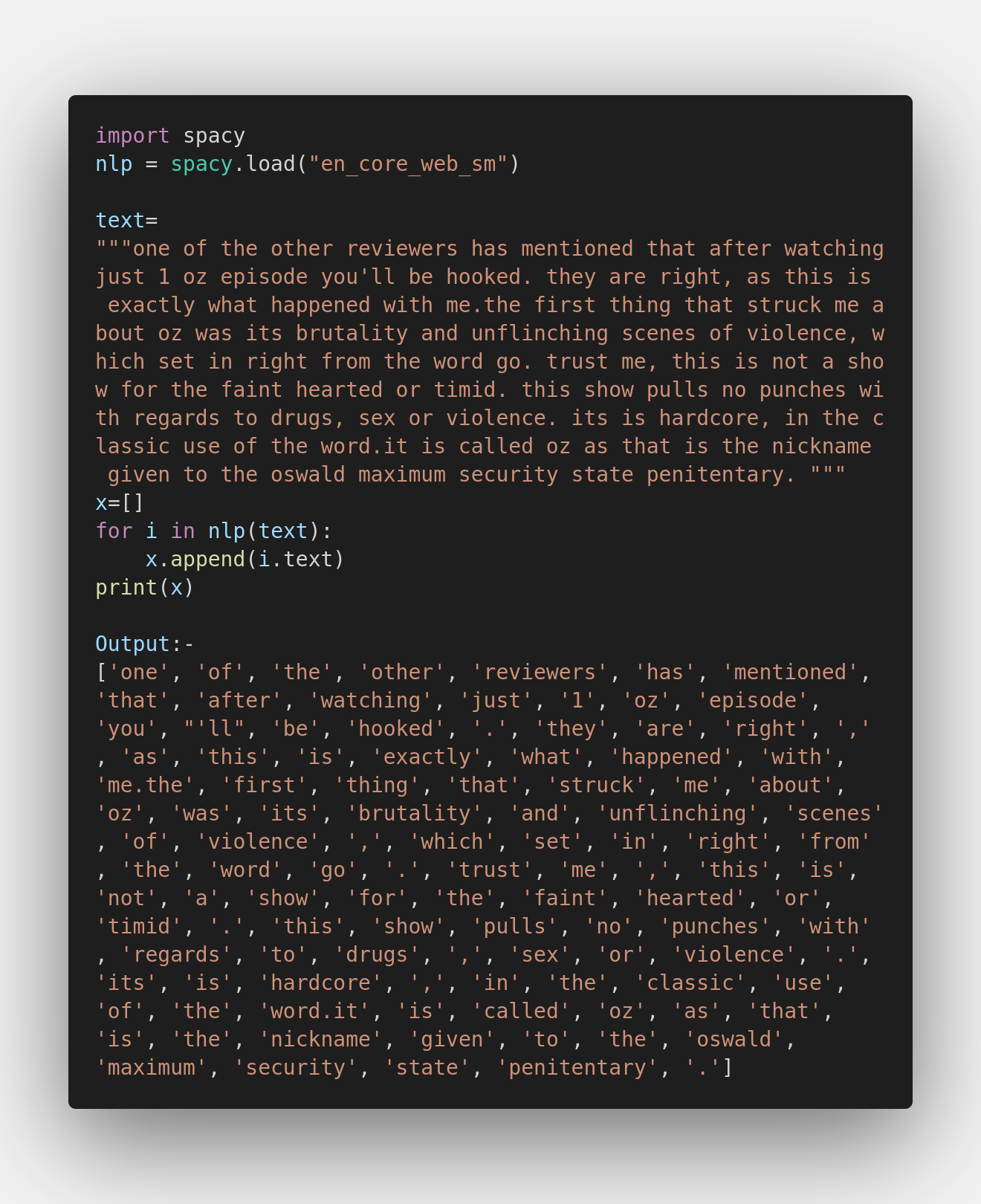
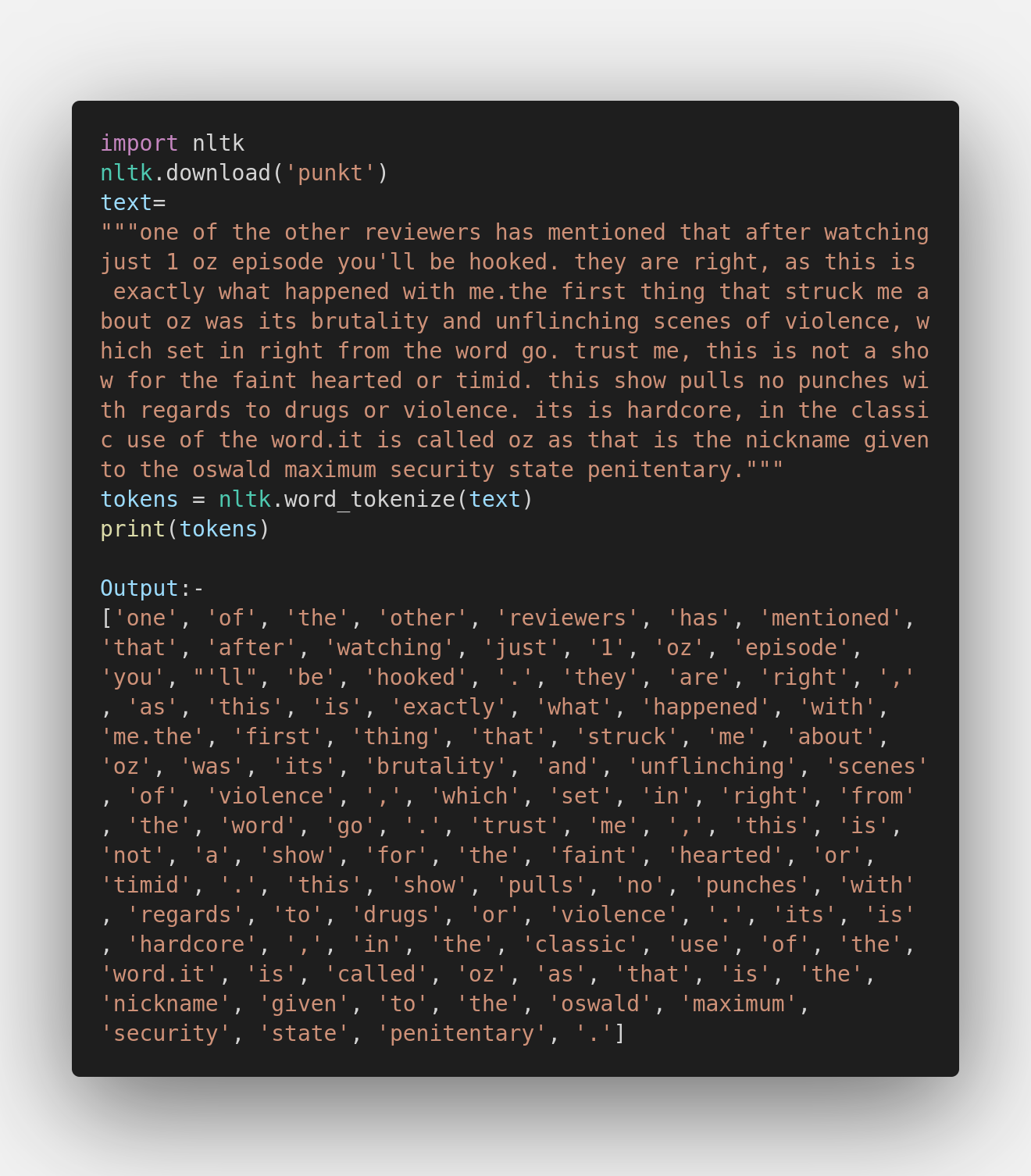
In both the examples, there is no significant change in the output, and both the libraries work just fine. Using either library will get your job done.
Sentence Tokenization:
Sentence tokenization takes a text and splits it into individual sentences. For literature, journalism, and formal documents the tokenization algorithms built into spaCy perform well, since the tokenizer is trained on a corpus of formal English text. The sentence tokenizer shows poor performance for electronic health records featuring abbreviations, medical terms, spatial measurements, and other forms not present in standard written English.
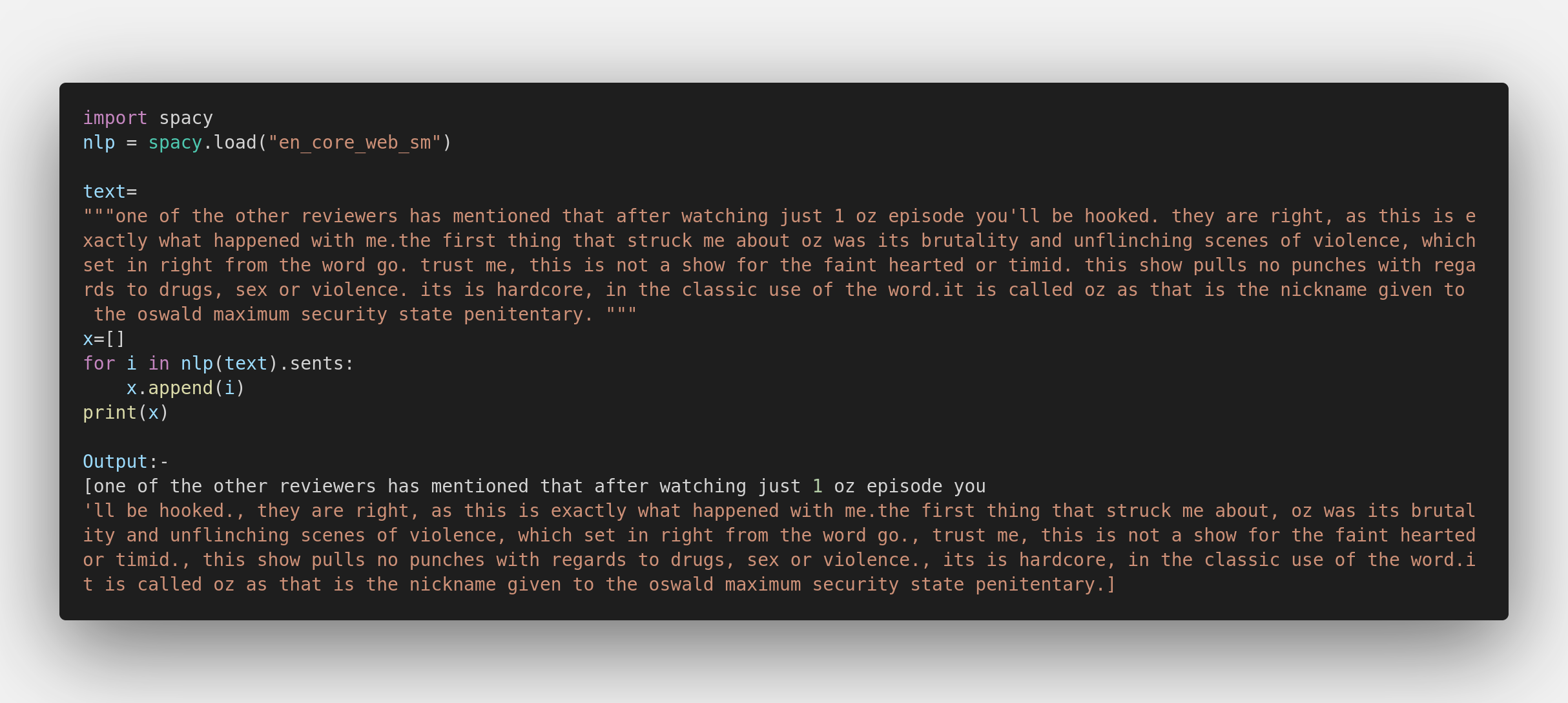
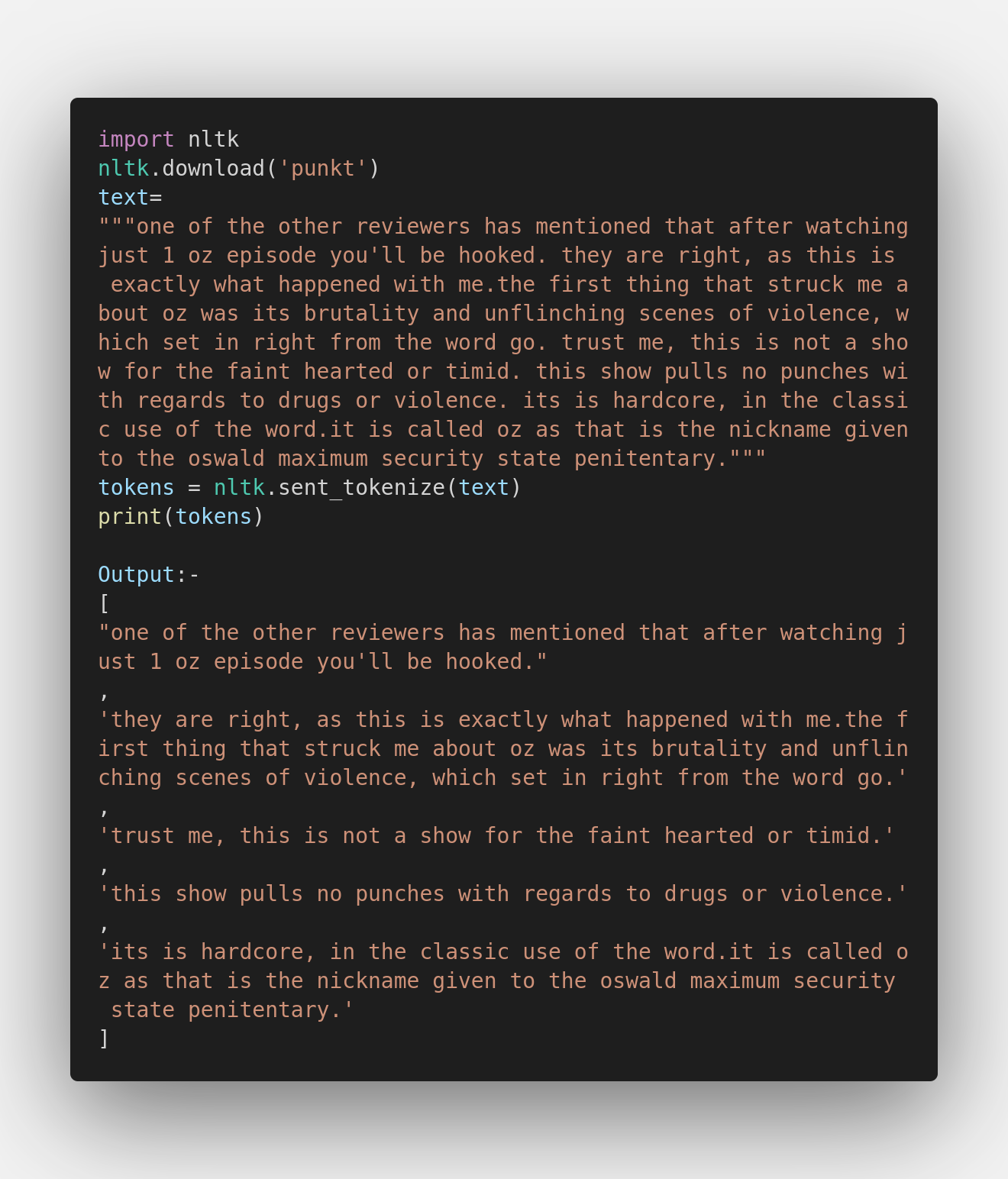
From the example, we can figure out that spaCy has considered that whole sentence after the apostrophe (‘) to be a single sentence, making it ineffective in the sentences where apostrophes are regular. Whereas, NLTK has separated the sentences quite well with minor setbacks.
Remove Stop Words:
StopWords are English words that do not add much meaning to a sentence, so we can remove all the stop words from the text. E.g. “a”, ”the”, ”have”, ”an” etc…
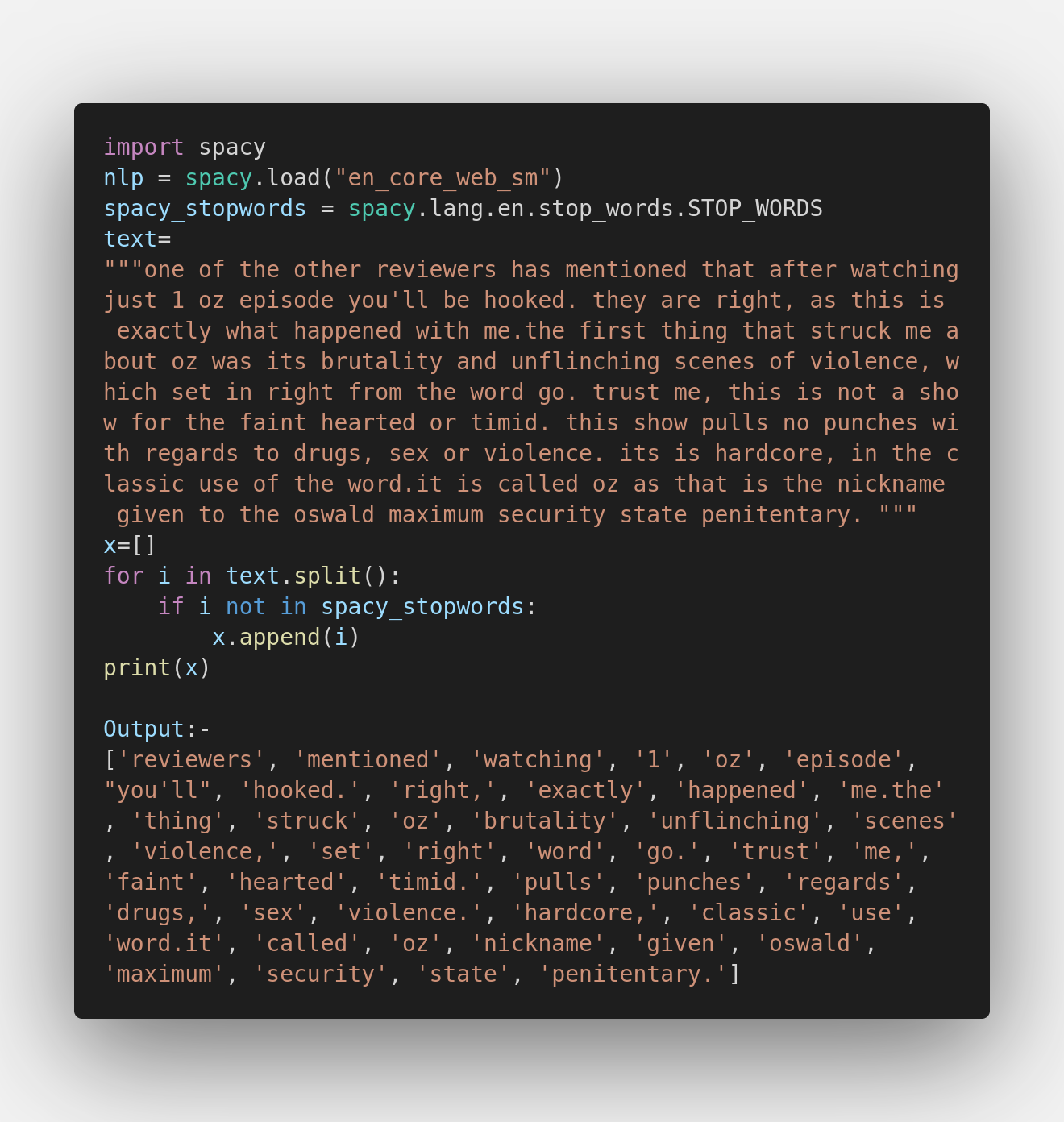
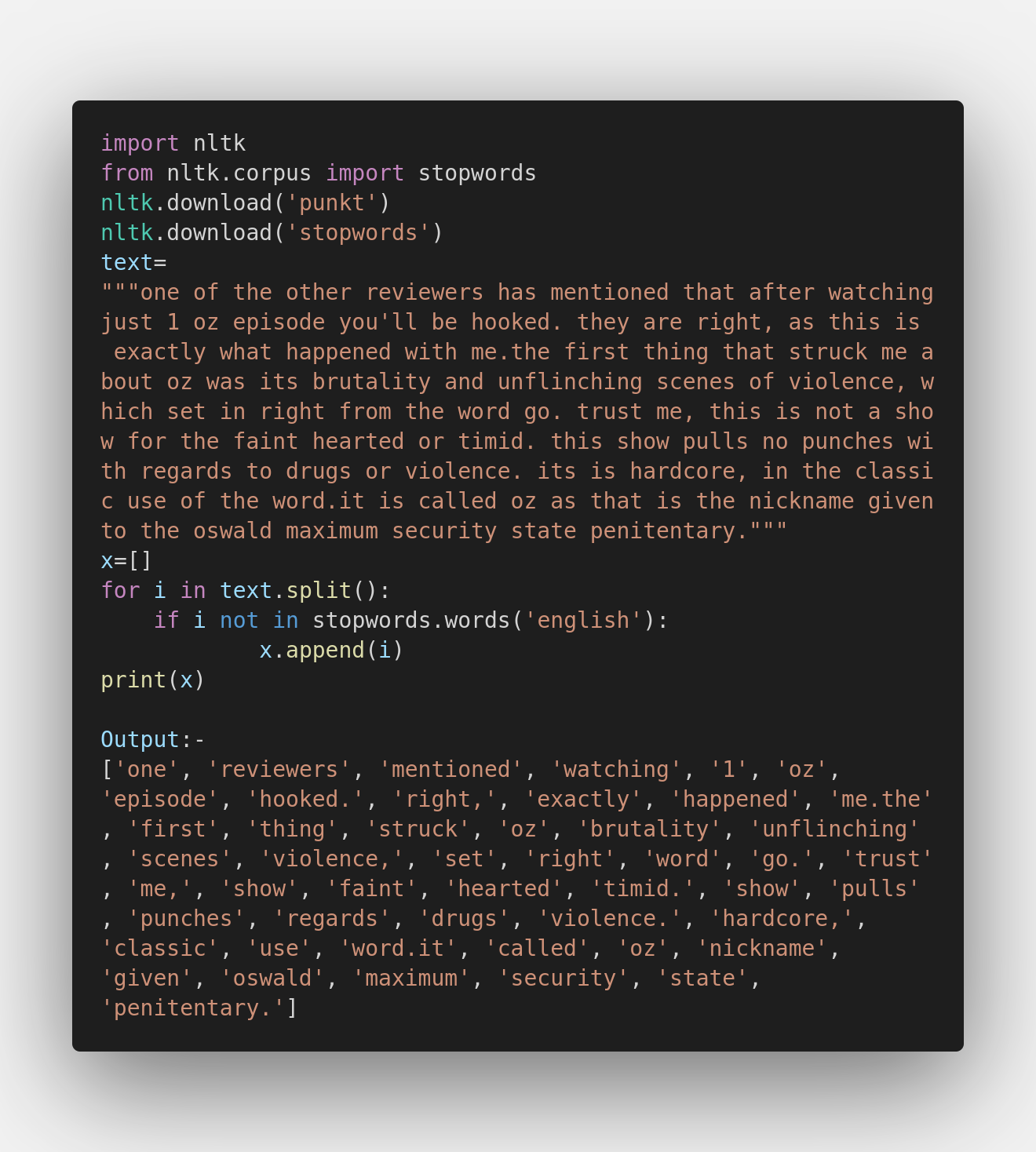
Both the libraries, spaCy and NLTK have done a decent job in removing the stop words from the paragraph. Both can get your task done quite efficiently. However, to pick a winner, spaCy has done better in the segment which is quite accurate. Moreover, NLTK requires downloading the required package to perform the task.
Lemmatization:
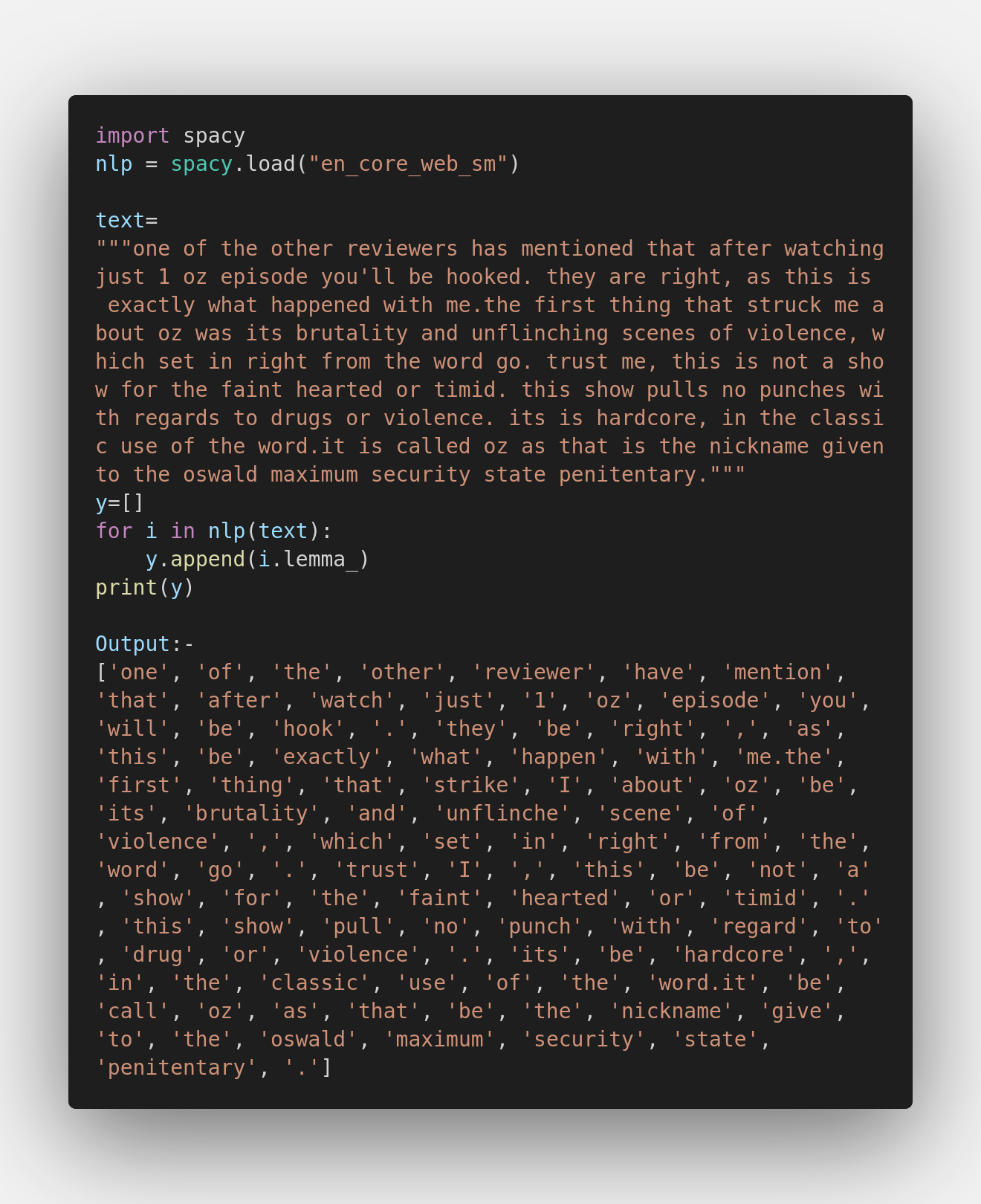
Lemmatization is the text normalization technique for spaCy, that will remove words having the same meaning. It is a process of getting the base word of a given word i.e. “counter”, ”count”, so here the base word is “count”.
Stemming:
Stemming is the process of producing morphological variants of a base word. Stemming algorithms and stemming technology are called stemmers. NLTK has a built-in stemmer algorithm called “PorterStemmer” which we have used in the below code. This process is very useful when we are developing a Natural language Processing algorithm. Stemming is the counterpart of spaCy’s Lemmatization.
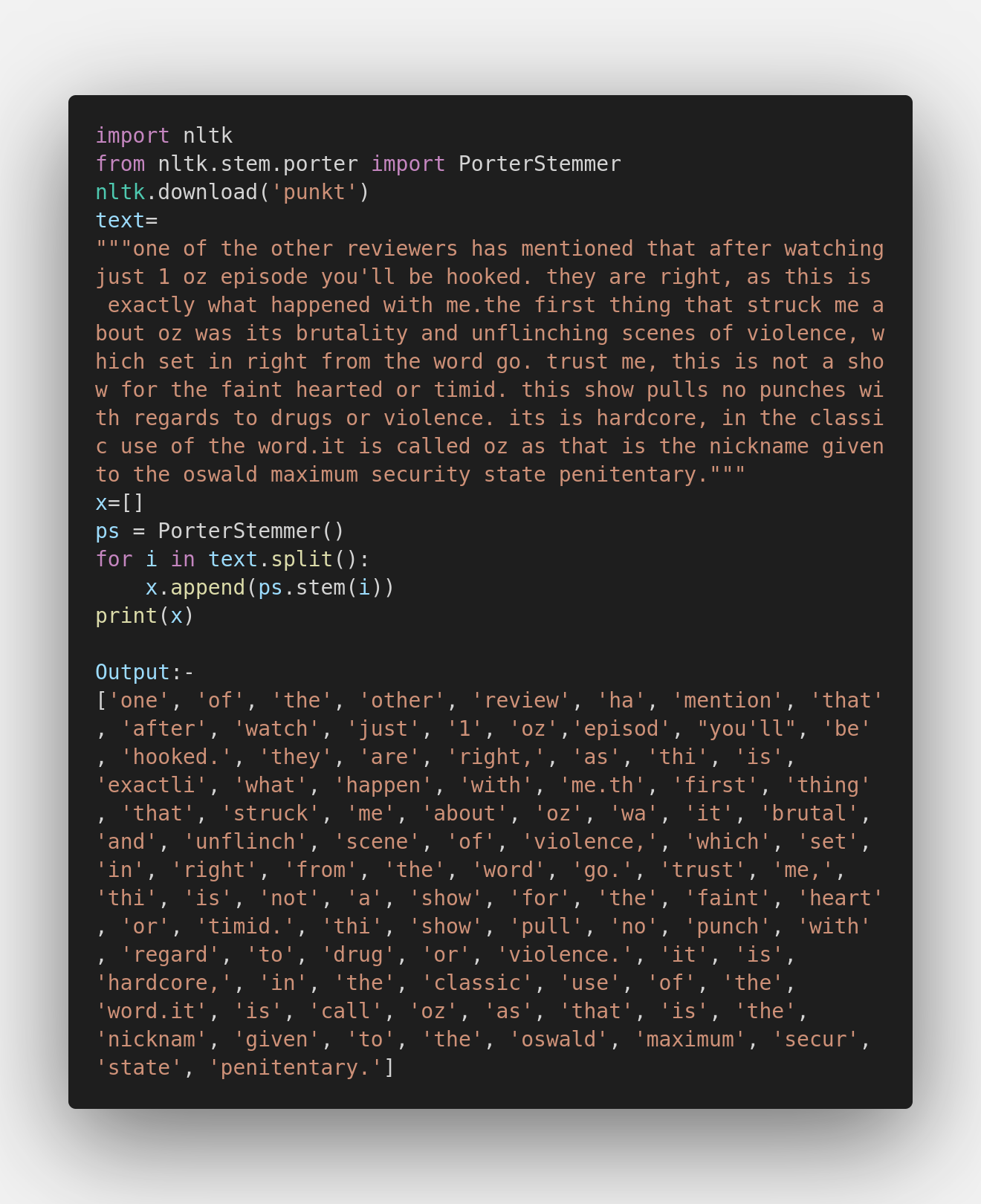
Considering both Lemmatizations and Stemming, I believe that Lemmatization has done a better job in neutralizing the words to their base form, whereas, stemming has changed the meaning of the words by truncating the vowels in the end. This makes NLTK inferior to spaCy in the segment.
End Note
NLTK and spaCy both are very good libraries for building an NLP system. As compared to NLTK, spaCy is more useful in the development and production environment because it provides a very fast and accurate semantic analysis compared to NLTK. Researchers usually prefer to use NLTK because it has a variety of algorithms and with that algorithms, some tasks are very easy to perform. Hence, the best library to use for your project entirely depends on your use case, making the developer move more towards spaCy and researchers towards NLTK.
Want to go deeper? Check out our follow-up post, NLTK vs spaCy: A Deeper Dive into NLP Libraries, where we explore advanced features, integrations, and future trends for both libraries.
We, at Seaflux, are AI & Machine Learning enthusiast who is helping enterprises worldwide. Have a query or want to discuss AI or Machine Learning projects? Schedule a meeting with us here, we'll be happy to talk to you!
Frequently Asked Questions (FAQ): Get the Answers You Need
What is the difference between spaCy and NLTK?
spaCy is a fast, production-focused NLP library with pre-trained models and an opinionated pipeline, ideal for shipping real applications. NLTK is a research-oriented toolkit offering access to many interchangeable algorithms, better suited for study and experimentation. The core tradeoff is speed and simplicity versus flexibility and control.
Which is faster, spaCy or NLTK?
spaCy is significantly faster in most cases. It's built in Cython and optimized for production workloads, while NLTK is a pure Python library designed more for flexibility than raw speed.
Is spaCy better than NLTK?
Neither is universally better. spaCy is the stronger choice for production applications that need speed and reliability. NLTK is the stronger choice for research, teaching, or projects that need fine control over which specific algorithm handles a task.
Can I use spaCy and NLTK together?
Yes. Many teams use NLTK during research or prototyping, where flexibility matters most, and switch to spaCy once it's time to build the production version, where speed and stability matter more.
Does spaCy support stemming like NLTK?
Not directly. spaCy focuses on lemmatization, which reduces words to their real dictionary form, rather than stemming, which NLTK supports through algorithms like the Porter Stemmer. Lemmatization is generally considered more accurate.
Is NLTK still relevant in 2026?
Yes, particularly in academic and research settings. Its transparency and wide range of built-in algorithms still make it a strong teaching tool and a flexible option for experimentation, even though spaCy has become the more common choice for production systems.

Jay Mehta
Director of Engineering